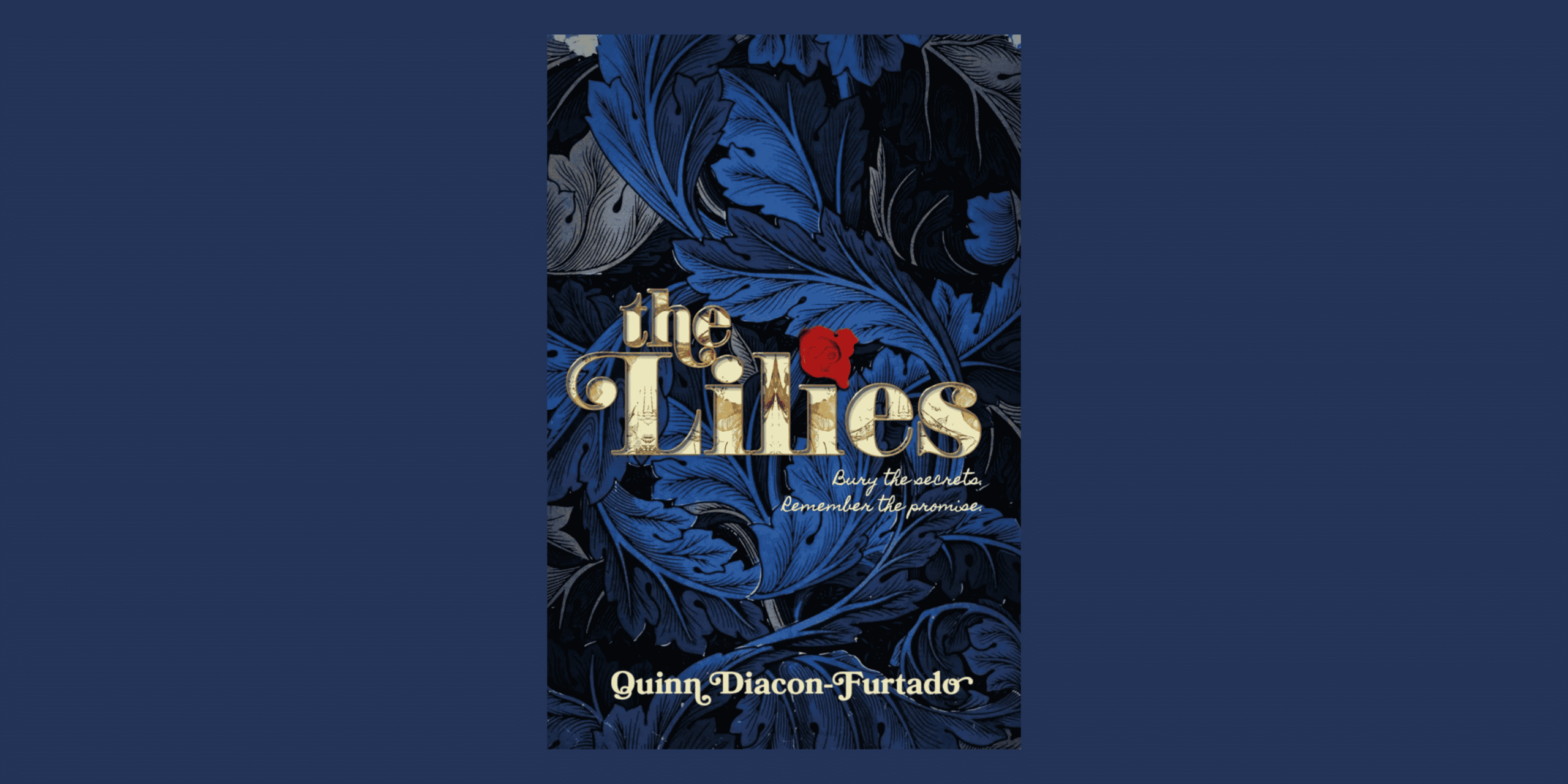
Dark academia has been having a moment for years now. Moody boarding schools, secret societies, morally complicated students readers cannot get enough. But The Lilies by Quinn Diacon Furtado does something most dark academia novels do not dare to attempt: it throws a full-blown time loop into the mix, traps four mismatched students in a closet together, and forces every single secret to the surface whether they like it or not.
Diacon-Furtado clearly understands this risk, because the time loop in The Lilies has a very specific set of rules that keeps it from going stale. If you’re a fan of stories that mess with the fabric of history, you might want to explore other essential YA time travel books that play with similar mechanics.
This is a debut novel that swings big. It blends mystery, magical realism, and deeply queer storytelling into something that fans of Karen McManus and Holly Jackson have been waiting for. But does it stick the landing? I read every page, looped through every twist, and I am here to give you the full, honest breakdown.
Book at a Glance
About the Author: Quinn Diacon-Furtado
Before we get into the story, it is worth knowing who wrote it because Quinn Diacon-Furtado is not your average debut author. They use they/them pronouns and come with a genuinely impressive literary background. Quinn holds an MFA in Creative Writing for Children from Hollins University and was a 2022 Lambda Literary Fellow in Young Adult Fiction. They are also a former K-12 educator, which shows in how thoughtfully the school dynamics are drawn on every page.
Their creative interests span gender, magic, intuition, and memory and all four of those pillars show up in The Lilies. Quinn is also a tarot practitioner and an emerging filmmaker, which perhaps explains why the novel has such a cinematic, almost ritualistic atmosphere to it. This is an author building a fictional world that deliberately mirrors and challenges the real one.
What Is The Lilies About? (Spoiler-Free)
The story is set at Archwell Academy, an elite all-girls boarding school where reputation is everything and prestige is the only currency that matters. At the top of the social ladder sits The Lilies Society a secret society so powerful that membership practically guarantees a successful future. Everyone wants in. And like every institution built on exclusivity, something very dark lives beneath the surface.
Sometimes girls disappear.
The novel centers on the mystery of Charlotte Vanderheyden, a sophomore who vanishes after Founder’s Night the Lilies Society’s annual initiation ritual. The morning after Charlotte disappears, a school lockdown drill traps four seniors together in a small closet. And that is where things get strange. Instead of waiting out the drill, the four students find themselves caught in a time loop, forced to relive the same twenty-four hours over and over again.
With each reset, a new secret claws its way to the surface. And the only way out is through.
Official Publisher Description
Meet the Four Main Characters
The story unfolds through four rotating points of view. Each character brings a completely different background, identity, and set of secrets to the closet. Getting to know them is one of the genuine pleasures of this novel.
Rory Archwell
The Legacy · The Perfectionist
The Chancellor’s daughter and a legacy member of the Lilies. Rory is not above sabotage in her relentless pursuit of perfection, and her former romantic relationship with Blythe makes every loop between them electrically tense.
Blythe Harris
The Achiever · The Trailblazer
Determined to become Archwell’s first Black valedictorian no matter what it costs her. Blythe is sharp, driven, and hiding the quiet weight of what it takes to succeed in a space that was never built for her.
Drew Simmons
The Outsider · The Secret Keeper
Nonbinary and new to Archwell, Drew transferred to claim an inheritance tied to a mysterious legacy. They were Charlotte’s roommate which puts them closer to the disappearance than anyone is comfortable with.
Veró Martín
The Activist · The Truth-Teller
An artist and activist who channels uncomfortable truths into provocative artwork. Veró operates under the persona of Malcriada and sees everything people want hidden which makes her both powerful and dangerous.
These four characters were never supposed to share a room together. Their secrets are incompatible. Their histories are tangled. And the time loop does not care about any of that. It keeps resetting until they face every single thing they have been running from.
How the Time Loop Works and Why It Matters
If you have read Groundhog Day-style fiction before, you know the risk: repetition done poorly drains all the tension out of a story. Diacon-Furtado clearly understands this risk, because the time loop in The Lilies has a very specific set of rules that keeps it from going stale.
The loop is not about reliving a random day. It targets the characters’ collective worst moment specifically, the night of the Lilies initiation where Charlotte disappeared. Every time the four students try to change the outcome or deviate from how events originally unfolded, the loop resets. They are pulled back to the beginning, forced to try again.
This structure is genuinely clever, because it means the repetition serves the theme. The loop is a metaphor for trauma. When you try to run from the worst thing that happened, it pulls you back. The only way forward is to stop hiding, face what really happened, and tell the truth all of it.
Each cycle through the loop reveals a new angle on the same events. A detail Rory noticed that Blythe missed. Something Drew heard that Veró misinterpreted. The multi-POV structure earns its place here because seeing the same moment through four different sets of eyes is genuinely revelatory. You start to understand why readers describe this as compelling the mystery deepens with every loop rather than feeling like padding.
That said, some readers do find the pacing slow in the middle sections. If you are someone who needs constant plot momentum, the introspective quality of certain loops may test your patience. But if you read for character and atmosphere, those same sections are the heart of the book.
The Themes That Make This Book Unforgettable
The Lilies is not just a mystery thriller. It is a novel with things to say and it says them with precision.
Institutional Rot and Secrets
The Lilies Society represents every elite institution that protects its own at all costs. The novel asks a sharp question: when the people inside a system benefit from its silence, who pays the price? The answer is always someone who was never given a seat at the table.
The Cost of Hiding Who You Are
Every single character in this book is hiding something not just about the mystery, but about themselves. The novel argues that the act of concealment is its own kind of violence. Authenticity, even when it is terrifying, is the only thing that breaks the cycle.
Trauma as a Loop
The time loop is not a random supernatural event. It is a direct metaphor for the way trauma works. You replay it. You revise it. You try to escape it. And it keeps pulling you back until you finally stop running.
Power, Privilege, and Legacy
Archwell Academy is built on inherited advantage. Rory’s last name opens every door. Blythe has to fight for access that Rory takes for granted. The novel does not lecture about this it dramatizes it in ways that feel uncomfortably real.
Queer Identity and Visibility
The LGBTQ+ representation here is woven into the fabric of the story, not bolted on as an afterthought. Trans, nonbinary, and queer characters exist fully and messily, with identities that shape how they move through the world of Archwell Academy.
Writing Style and Atmosphere
Quinn Diacon-Furtado writes with a confident, atmospheric voice that feels right at home in the dark academia genre. Archwell Academy breathes on the page cold stone corridors, candlelit rituals, the pressure-cooker social hierarchy of elite boarding school life. The setting is vivid without being over-written.
The four POV voices are distinct in personality, even if a handful of readers note that the narrative voice can blur slightly between switches. A practical tip: pay close attention to chapter headers, especially in the middle of the book, to keep track of whose perspective you are in. Once you lock in each character’s emotional register Rory’s controlled anxiety, Blythe’s sharpness, Drew’s watchful uncertainty, Veró’s defiant clarity the story clicks into focus and moves fast.
The prose is clean and direct. Diacon-Furtado does not over-explain. They trust readers to sit with ambiguity, which is a real strength in a mystery novel. The dialogue feels lived-in, especially the charged exchanges between Rory and Blythe two people with history who keep reaching for honesty and pulling back from it.
Goodreads Reviewer
What Readers Are Actually Saying
Reader responses to The Lilies fall into two clear camps, and both are worth hearing.
The Praise
Readers who connect with this book tend to love it intensely. The queer representation consistently earns praise for feeling authentic and specific rather than performative. The time loop mechanic, when it clicks, is described as expertly executed building genuine dread with each reset. Many readers highlight the moment the four characters stop fighting the loop and start telling the truth as genuinely moving. Award-winning YA authors including Kyrie McCauley and Laura Steven gave the book strong endorsements before publication, and the Barnes & Noble YA Book Club Pick recognition confirms its mainstream appeal.
The Criticism
Kirkus Reviews described the novel as a complex story somewhat undercut by a confusingly executed paranormal element. Some readers who came in expecting a fast-paced thriller in the vein of One of Us Is Lying found the loop-heavy structure slower than anticipated. A handful of reviewers also noted that the four POV voices occasionally blended together, making it briefly unclear whose perspective was on the page. These are real limitations worth knowing before you pick it up.
The Bottom Line from Readers
If you go in knowing this is a character-driven, atmosphere-heavy mystery with a supernatural mechanic at its core rather than a plot-driven thriller you will almost certainly enjoy it. Expectation management matters here more than with most YA novels.
Frequently Asked Questions
Is The Lilies a standalone novel or part of a series?
The Lilies is a standalone debut novel. The story is self-contained with a complete narrative arc, so you do not need to commit to a series to read it.
What age group is The Lilies appropriate for?
The publisher rates it for ages 13 and up. It contains some drug use references, psychological violence, and mature themes around identity and trauma. The content is consistent with standard YA fiction think PG-13 overall.
What books are similar to The Lilies?
If you enjoy The Lilies, you will likely also enjoy One of Us Is Lying by Karen McManus, A Good Girl’s Guide to Murder by Holly Jackson, The Atlas Six by Olivie Blake, We Were Liars by E. Lockhart, and Our Crooked Hearts by Melissa Albert.
Does The Lilies have LGBTQ+ representation?
Yes, and it is central to the story rather than incidental. The novel features trans, nonbinary, and queer characters whose identities shape how they navigate Archwell Academy and the events of the mystery. The representation is widely praised by readers for feeling authentic and fully realized.
How does the time loop work in The Lilies
Four students get trapped in a loop that forces them to relive the twenty-four hours surrounding the night of the Lilies initiation the night a student disappeared. Every time they deviate from the original events, the loop resets. The only way out is to uncover what truly happened and confront their own secrets in the process.
Who is Quinn Diacon-Furtado?
Quinn Diacon-Furtado is a YA author, former educator, and 2022 Lambda Literary Fellow who uses they/them pronouns. They hold an MFA in Creative Writing for Children from Hollins University and explore themes of gender, magic, memory, and identity in their work. The Lilies is their debut novel, published by HarperTeen in 2024.




Leave a Reply