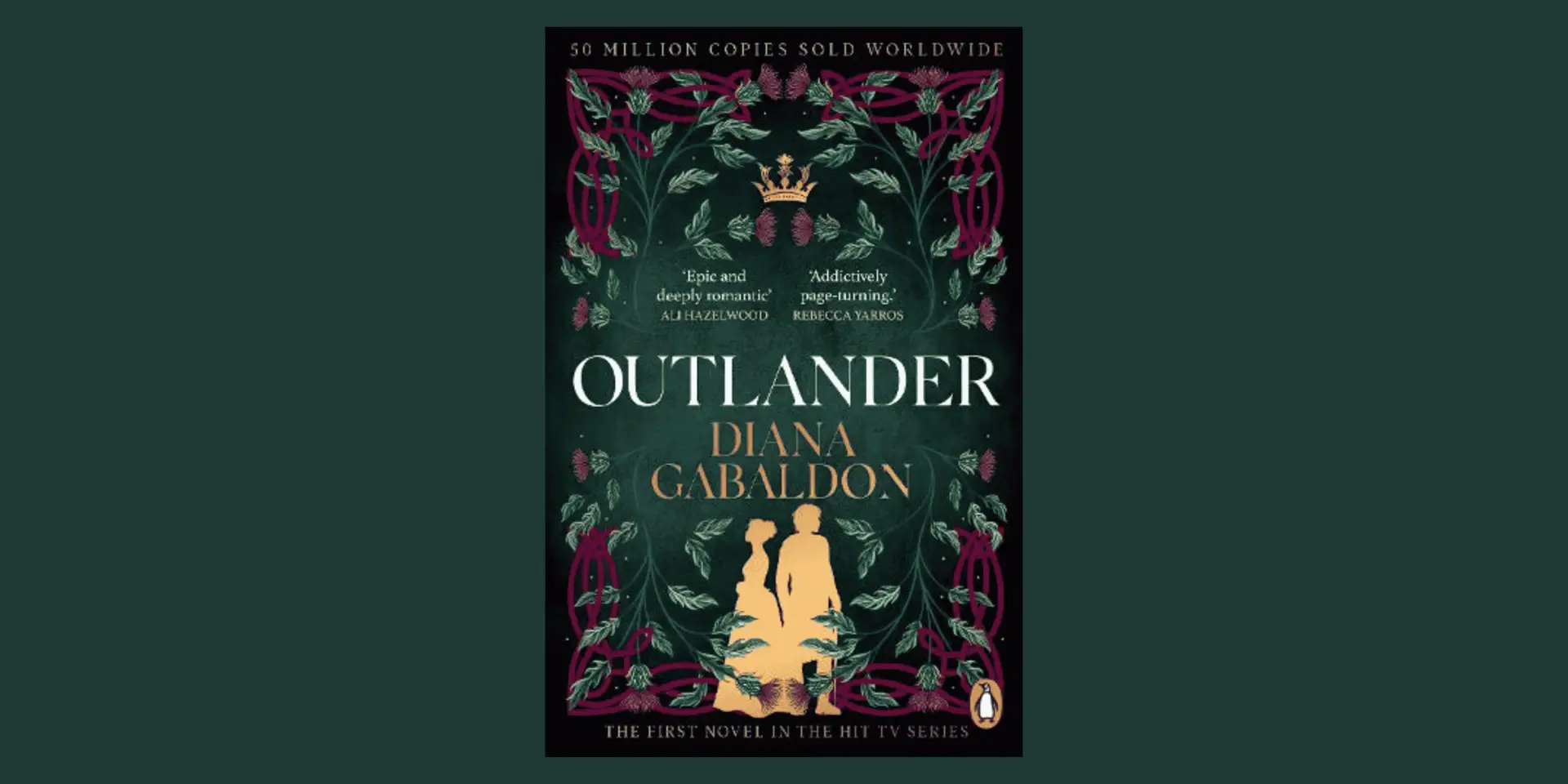
Few novels manage to bend genres as seamlessly as Outlander by Diana Gabaldon. Blending rich historical detail, high-stakes romance, time travel, and survival drama, Gabaldon’s debut novel remains a benchmark for immersive storytelling decades after its release. In this Outlander Diana Gabaldon book review, we will unpack the novel’s timeless themes of resilience and reinvention, detail its complete reading order, and explore why this sweeping saga continues to captivate readers across the globe.
What Is Outlander? A Quick Synopsis
For anyone new to the series, here is the Outlander by Diana Gabaldon synopsis in a nutshell:
The story follows Claire Randall, a former British combat nurse visiting Scotland in 1945 after World War II. While exploring the standing stones at Craigh na Dun, Claire touches an ancient stone and is unexpectedly transported back in time to 1743 Scotland. Thrust into a dangerous world on the brink of the Jacobite uprising, Claire is forced to navigate complex clan politics, harsh living conditions, and an unexpected marriage of convenience to Jamie Fraser a young Highland warrior.
What makes this Outlander novel so gripping is Gabaldon’s ability to ground fantastical premises in raw, authentic historical context. It is a story about identity, loyalty, and love set against the volatile backdrop of the 18th-century Scottish Highlands.
For readers who love sweeping epics, Outlander sits comfortably alongside the finest entries on our curated list of 25 Historical Fiction Books for Readers, a genre that continues to resonate with audiences across generations.
About the Author: Who Is Diana Gabaldon?
Understanding Diana Gabaldon’s background reveals why her world-building feels so grounded. Born on January 11, 1952, in Williams, Arizona, Gabaldon built an impressive academic career before publishing fiction. She holds a B.S. in Zoology, an M.S. in Marine Biology, and a Ph.D. in Quantitative Behavioral Ecology—a background in empirical observation that informs her meticulous attention to historical and medical detail.
Gabaldon initially began writing Outlander purely as practice to see if she could complete a novel. She chose 18th-century Scotland after seeing an episode of Doctor Who featuring a companion in a kilt named Jamie MacCrimmon. What began as a practice exercise evolved into a literary phenomenon; the Outlander series has sold over 50 million copies worldwide and has been translated into dozens of languages.
Outlander by Diana Gabaldon Pages, Format, and Publication Details
- Page Count: Approximately 850 pages in standard print editions (varies slightly by publisher).
- Original Publication Date: June 1, 1991 (Delacorte Press).
- Available Formats: Hardcover, Paperback, E-book, and Audiobook.
The audiobook edition, narrated by Davina Porter, is particularly famous in audiobook circles for its distinct character voices and immersive pronunciation of Scottish Gaelic phrases. Despite its intimidating length, the book’s episodic pacing keeps the narrative moving forward effortlessly.
A Deep Dive into the Story and Themes
The World Diana Gabaldon Built
The 18th-century Highlands in Outlander are far from romanticized fantasy. Gabaldon presents a world that is raw, politically unstable, and physically taxing. The harsh reality of daily survival, clan rivalries, and British military occupation creates constant underlying tension.
Core Themes
- Survival and Resilience: Claire must constantly adapt her 20th-century sensibilities to survive an era that offers very little autonomy to women. Like the enduring heroines found in The Nightingale, her strength lies in her resourcefulness and medical knowledge.
- Identity and Time: Claire’s struggle between her past life with Frank Randall and her present life with Jamie Fraser explores what truly constitutes a home.
- The Consequences of History: The narrative doesn’t shy away from the harsh realities of wartime conflicts, disease, and social hierarchy in the 1700s.
Historical Accuracy: The Soul of the Series
Gabaldon spent years researching Highland clan culture, 18th-century medical practices, and British military tactics. The narrative builds toward the tragic events leading up to the Battle of Culloden in 1746 a pivotal moment that permanently transformed Highland society. Readers interested in primary sources from this era can explore historical documents through the Library of Congress Jacobite Collections.
Much like other acclaimed period literature, such as The Tattooist of Auschwitz, Outlander derives its emotional power by placing deeply human characters in the center of real historical tragedy.
Character Analysis: Claire and Jamie
- Claire Randall Fraser: Claire is intelligent, stubborn, and deeply pragmatic. Her combat nursing skills make her indispensable, though her medical expertise occasionally leads locals to suspect her of witchcraft. Her unwillingness to conform to 18th-century gender expectations drives much of the story’s dynamic tension.
- Jamie Fraser: Jamie is a complex hero shaped by honor, trauma, and deep personal faith. Unlike many traditional historical romantic leads, Jamie values Claire’s independence and intellect, forming a partnership rooted in mutual respect.
Global Reception and Goodreads Feedback
On platforms like Goodreads, Outlander maintains an impressive average rating above 4.2 out of 5 stars across millions of reader ratings.
- What Readers Praise: The immersive world-building, high-stakes relationship development, and strong female lead.
- Common Critiques: The extensive length and sensitive content involving 18th-century violence, which some readers find intense.
Diana Gabaldon Books in Order: The Complete Series Guide
For new readers looking to navigate the Outlander universe, here is the chronological reading order of the main saga:
| # | Title | Original Publication Year |
| 1 | Outlander | 1991 |
| 2 | Dragonfly in Amber | 1992 |
| 3 | Voyager | 1993 |
| 4 | Drums of Autumn | 1996 |
| 5 | The Fiery Cross | 2001 |
| 6 | A Breath of Snow and Ashes | 2005 |
| 7 | An Echo in the Bone | 2009 |
| 8 | Written in My Own Heart’s Blood | 2014 |
| 9 | Go Tell the Bees That I Am Gone | 2021 |
| 10 | Blood of My Blood | Forthcoming |
Note for Editors: When new companion novellas, box sets, or updated anniversary editions are announced, insert the updated publication details into this section.
Diana Gabaldon’s Book 10 Status: Blood of My Blood
The tenth and planned final novel in the main Outlander saga is titled Blood of My Blood. The title carries emotional weight for long-time readers, taking inspiration from the Gaelic wedding vows spoken between Jamie and Claire in the initial novel.
Current Status: In progress. As official publication dates, cover reveals, or pre-order links become available, update this exact space with confirmed release information.
Companion Novellas and Standalone Stories
Beyond the main series, Gabaldon has expanded the universe through companion works, including the Lord John Grey series (focusing on Lord John Grey’s diplomatic and military investigations) and standalone novellas like The Space Between. These shorter works offer deeper insights into side characters without requiring a full re-read of the main novels.
Is Diana Gabaldon Scottish?
A common misconception among readers is that Gabaldon is Scottish due to her vivid depiction of the country’s landscape and heritage. She is American and was raised in Arizona. Her authentic portrayal of Scotland stems entirely from rigorous research, archival study, and frequent travels to Scotland following the success of her early books.
Final Verdict: Should You Read Outlander?
Outlander remains a masterclass in historical world-building. While its page count and detailed descriptions demand time, the investment pays off through rich character arcs and intense storytelling. Whether you are a fan of historical fiction, romance, or adventure, Outlander delivers an unforgettable journey across time.



Leave a Reply