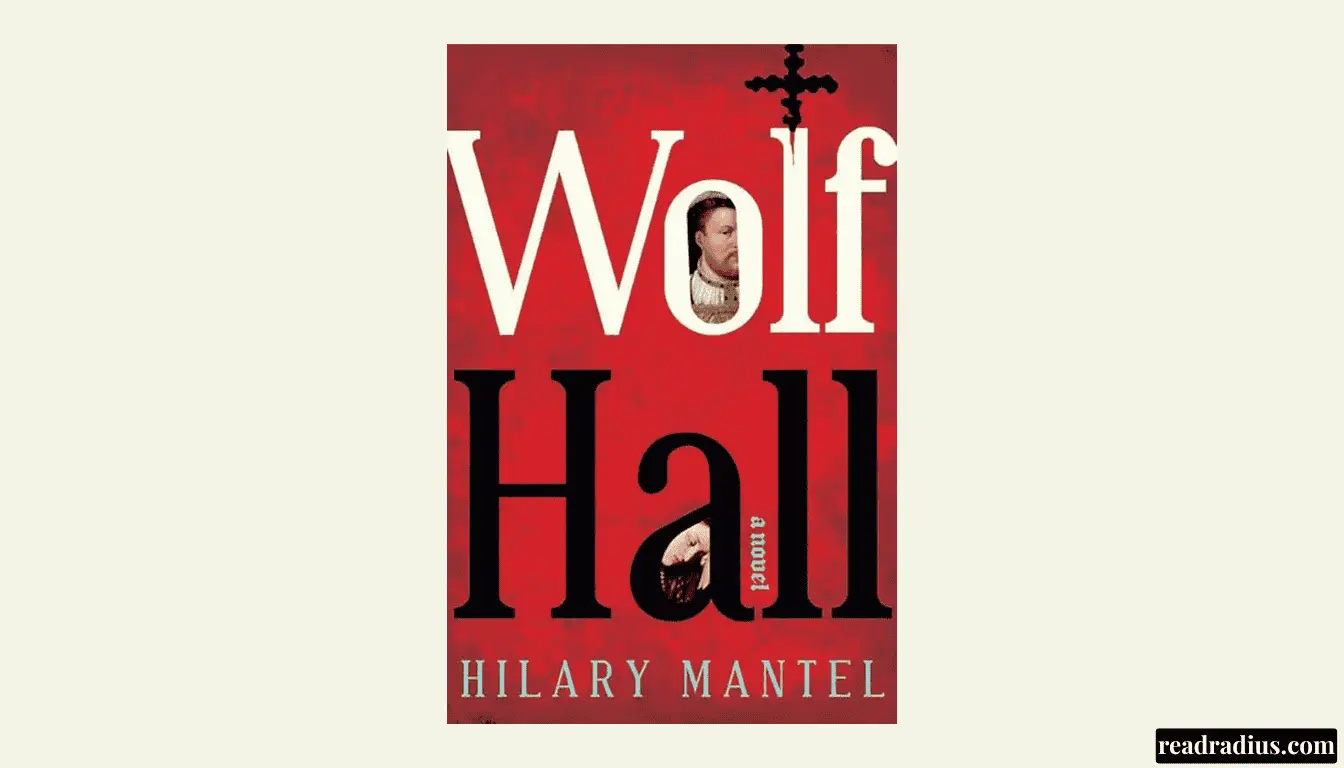
Few historical sagas manage to make a 16th-century civil servant feel like the most compelling character in modern fiction, yet that is exactly what Hilary Mantel achieved. Anyone who picks up her Cromwell novels quickly understands why they became a publishing phenomenon rather than just another costume drama in book form. This Hilary Mantel’s Wolf Hall Trilogy by Hilary Mantel book review looks closely at what makes the series so absorbing, why critics and everyday readers still argue about it years later, and whether it deserves a spot on every historical fiction lover’s shelf.
Hilary Mantel’s Wolf Hall Trilogy by Hilary Mantel Book Review
Reading all three novels back to back is a genuinely different experience than sampling just the first book. The trilogy follows Thomas Cromwell from a bruised, half-starved boy fleeing his blacksmith father in Putney to the most powerful commoner in Henry VIII’s England, and finally to his own downfall on the scaffold. What sets this apart from the usual Tudor fare is the intimacy of the storytelling. Readers are placed so firmly inside Cromwell’s head that his ruthlessness starts to feel reasonable, even sympathetic, which is a remarkable trick for any novelist to pull off.
Many longtime readers of historical fiction admit they went in expecting a dry political chronicle and came out surprised by how emotionally involving the books turned out to be. Cromwell’s grief, his private jokes, his memories of his dead wife and daughters, and his quiet calculations all build a portrait that feels closer to a psychological character study than a costume epic. That blend of intimacy and grand political sweep is the real reason the trilogy has stayed relevant for well over a decade.
Hilary Mantel Wolf Hall Trilogy: The Three Books at a Glance
The hilary mantel wolf hall trilogy is made up of Wolf Hall (2009), Bring Up the Bodies (2012), and The Mirror and the Light (2020). The first two both won the Booker Prize, an almost unheard-of achievement for consecutive books in the same series, and the third closes out the story with the same unflinching detail. Together they cover roughly the last two decades of Cromwell’s life, tracking his rise through Cardinal Wolsey’s household, his engineering of Anne Boleyn’s downfall, and his eventual arrest under the same king he had served with total loyalty.
Readers who want the short version before committing to over 2,000 pages often search for a wolf hall book summary first, and it helps to know the shape of the story going in: a low-born man out-thinks the English aristocracy for years, only to be destroyed the moment his usefulness runs out. Knowing that outcome does not spoil the experience, though, because the pleasure of these books lies in the texture of how it happens, not the surprise of what happens.
Hilary Mantel Wolf Hall Review: What Actually Makes It Work
Any honest hilary mantel wolf hall review has to start with the prose itself. Mantel writes almost entirely in the present tense and refers to Cromwell simply as “he,” a choice that unsettled some early readers and delighted others. Once the rhythm clicks, it creates a strange, almost cinematic immediacy, as if the reader is standing just behind Cromwell’s shoulder in every council chamber and candlelit bedroom.
Critics were divided at first over whether this technique was genius or gimmick, and that tension is part of what makes the books worth discussing rather than simply consuming.
A Quick Note From Experience
Anyone recommending these books to a friend should be honest about the learning curve. The first hundred pages of Wolf Hall can feel disorienting, with several characters sharing the name Thomas and a narrative that assumes some familiarity with the period. Sticking with it pays off, though. By the midpoint of the first book, the fog lifts, and by the second book, Bring Up the Bodies, the pacing tightens considerably, which is often the point where hesitant readers become fully invested. Readers who enjoy the slower-burn structure of literary historical fiction tend to get the most out of this trilogy, while those wanting fast-paced plotting might prefer to start with the television adaptation as an entry point before tackling the books.
Hilary Mantel Writing Style: Why It Divides Readers
Hilary mantel writing style is often described as dense, but “dense” undersells what she is actually doing. Her sentences move quickly between political scheming, sensory detail, and Cromwell’s private inner monologue, sometimes within the same paragraph. There is very little hand-holding; she trusts readers to track shifting alliances and unspoken threats without a lot of explanatory scaffolding.
That trust is exactly why some readers bounce off the trilogy while others become lifelong evangelists for it. The reward for staying patient is prose that captures Tudor England with an almost tactile realism, from the smell of a blacksmith’s forge to the suffocating etiquette of a royal court where a single wrong word could mean execution. It is historical fiction written with the ambition and precision of literary fiction, and that combination is rare enough to explain the trilogy’s lasting reputation.
Wolf Hall Cast: Bringing the Books to the Screen
For readers who prefer to watch before they read, the BBC adaptation is a strong companion piece. The wolf hall cast features Mark Rylance as Thomas Cromwell and Damian Lewis as Henry VIII, with Claire Foy playing Anne Boleyn and Jonathan Pryce as Cardinal Wolsey. The original 2015 series covered the first two novels, and a follow-up series adapted The Mirror and the Light, reuniting much of the same cast years later.
Rylance’s performance in particular captures something of what Mantel does on the page: a Cromwell who is watchful, controlled, and quietly dangerous rather than loud or theatrical. Watching the series first can actually make the novels easier to follow, since it gives faces and voices to the sprawling cast of dukes, bishops, and courtiers before the reader has to keep track of them on paper.
Where the Trilogy Fits Among Hilary Mantel Books
Among all of hilary mantel books, the Cromwell trilogy is by far her most celebrated work, though her earlier novels, including A Place of Greater Safety about the French Revolution, show the same fascination with power, ambition, and historical figures rendered as flawed, breathing people. What the trilogy does that her other work does not is combine that historical rigor with three connected volumes large enough to let a single character evolve across an entire adult lifetime. Few novelists get the chance to spend that much time with one protagonist, and even fewer make readers wish the story could keep going once it inevitably ends at the executioner’s block.
Final Verdict
This trilogy rewards patience with one of the richest character studies in modern historical fiction. It is not a light read, and it does not try to be, but readers who commit to it tend to come away understanding Tudor England, and Thomas Cromwell himself, on a level that few other books in the genre manage to reach. For anyone building out a historical fiction reading list, this series belongs near the top, alongside other landmark works covered in this site’s Historical Fiction Books: A Reader’s Ultimate Guide.




Leave a Reply