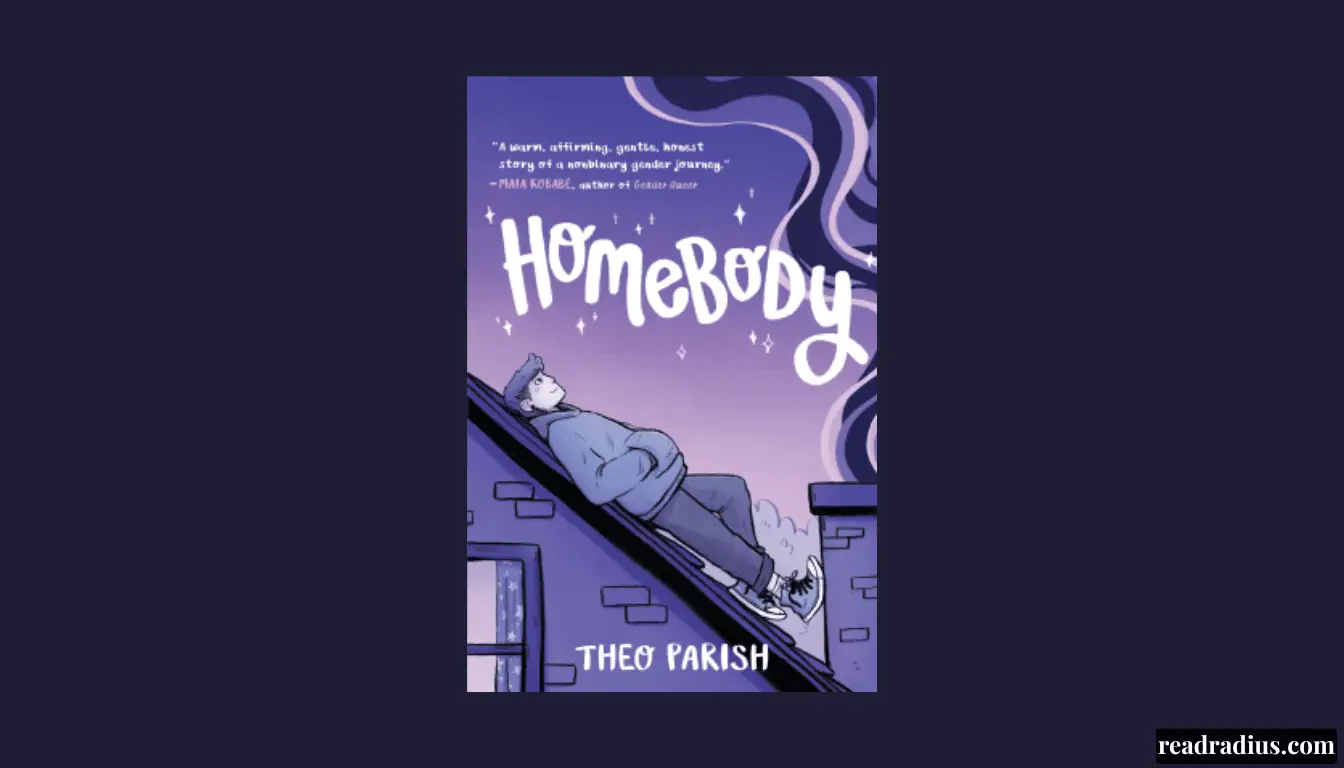
Some books feel like a cozy blanket on a rainy afternoon, and Homebody by Theo Parish is one of them. Gentle, honest, and full of hope, this graphic novel memoir explores gender identity, self-discovery, and the search for belonging. Readers who love Heartstopper or are interested in LGBTQ+ literature may find a lot to appreciate here.
In this Homebody book review, we look at Theo Parish’s personal journey, the memoir’s distinctive art style, its coming-of-age themes, and why this illustrated story may resonate with teens, young adults, and adult readers alike.
What Is Homebody by Theo Parish About?
Homebody is the comics debut of Theo Parish, a cartoonist based in Norwich, England, who lives with three cats. Published by HarperAlley in 2024, this graphic novel memoir tells the story of one nonbinary person learning to understand their gender identity and feel more comfortable in their own skin.
Rather than presenting identity exploration as a straightforward journey from confusion to certainty, Parish shares the small experiences, questions, and discoveries that gradually shape their sense of self. The result is a personal coming-of-age story about finding what fits, expressing individuality, and discovering what it means to feel at home within yourself.
You can find more information about the book in the publisher’s book listing.
The Story in a Nutshell
The story begins with childhood experiences that many readers may recognize in their own way. Young Theo feels uncomfortable with the expectations other people place on them. Boys assume they cannot play chess, while hairdressers repeatedly push feminine hairstyles that do not feel right.
These moments might seem small, but together they show how social expectations and traditional gender norms can affect a person’s understanding of themselves. Parish describes the discomfort of trying to fit in while slowly discovering that there is no single correct way to look, behave, or express an identity.
As Theo grows older, art school, comic conventions, tabletop roleplaying games, friendships, and countless internet searches become part of the process of figuring things out. Through these experiences, they begin to understand their nonbinary identity and explore what self-expression means to them.
What makes the memoir particularly approachable is its honesty about uncertainty. Identity development does not happen overnight, and Parish does not pretend that it does. Their personal journey makes room for changing ideas, experimenting with different forms of expression, and learning to accept yourself along the way.
The message is reassuring without being preachy: you do not need to have every answer immediately, and you are allowed to take your time discovering who you are.
A House for a Body: Finding Your Home Within Yourself
The central metaphor is one of the most memorable parts of Homebody. Parish is represented with a literal house for a body, an imaginative visual idea that gives the memoir its emotional center.
The house represents the relationship between the body, the inner self, and the feeling of belonging. Instead of treating home as a physical place where someone lives, the story explores how it can also mean feeling comfortable with your identity and being able to express yourself authentically.
This idea connects the book’s different experiences, from childhood discomfort to experimenting with appearance and discovering a more affirming sense of identity. It also makes the story accessible to readers who may be unfamiliar with nonbinary experiences.
Between the traditional comics pages, journal entries and scrapbook-like sections offer additional glimpses into Parish’s thoughts and memories. These changes in narrative structure make the memoir feel intimate, as though the reader is being invited into a personal collection of reflections rather than simply following a conventional plot.
Ultimately, the house becomes a reminder that finding your place in the world can begin with learning to feel at home within yourself.
Art and Style: Pinks, Blues, and Purples
The artwork is a major part of what makes Homebody such an inviting reading experience. Parish uses expressive illustrations, thoughtful color choices, and a mixture of traditional comics and journal-style pages to communicate emotions that might be difficult to explain through words alone.
The palette of pinks, blues, and purples helps establish the memoir’s gentle atmosphere. Color also becomes a form of visual storytelling, reflecting changes in mood and moments of self-recognition. Joyful pink shades, for example, help convey gender euphoria and the happiness of discovering a way to express yourself that feels right.
BookPage’s review of Homebody highlights the expressive illustrations and the book’s appeal to readers who enjoy Heartstopper. Publishers Weekly also praised the clean-lined artwork and muted palette, which give the pages a soft, almost hazy quality.
The illustrations do more than decorate the narrative. Clothing, hairstyles, colors, and body imagery all contribute to the discussion of gender expression, identity, and social expectations. Small visual details help readers understand how seemingly ordinary experiences can influence someone’s sense of self.
The combination of text and image makes the memoir particularly accessible. Readers can follow the emotional journey through the artwork as well as the dialogue, while the changes in presentation keep the reading experience personal and engaging.
Homebody Theo Parish Review: What Works Best
Several elements make Homebody stand out among contemporary YA graphic novels and graphic memoirs.
1. Warmth Instead of Unnecessary Drama
Parish approaches gender exploration with kindness and openness. The memoir acknowledges difficult feelings without making distress the whole story. Its emphasis on comfort, self-acceptance, and personal growth gives it a feel-good quality that many readers will appreciate.
The result is a story that can offer reassurance to readers who are questioning their identity, as well as those who simply enjoy thoughtful stories about growing up.
2. A Balanced Look at Gender Identity
One of the book’s strengths is its attention to both gender dysphoria and gender euphoria. It explores discomfort with how others perceive you alongside the happiness that can come from finding a more authentic way to express yourself.
Parish also distinguishes between understanding your identity privately and sharing it with other people. Discovering something about yourself does not automatically mean knowing how to explain it to family, friends, or the wider world.
These experiences make the memoir feel grounded in personal reality rather than a simplified coming-out narrative.
3. An Accessible Introduction to Nonbinary Experiences
Readers do not need previous knowledge of gender terminology to understand the story. Parish writes in a conversational style, using personal experiences to explore broader ideas about identity, appearance, acceptance, and belonging.
For teens and young adults who are beginning to explore LGBTQ+ literature, this makes Homebody a welcoming starting point. It can also help cisgender readers better understand why gender expression matters and why people deserve the freedom to define themselves.
Importantly, the memoir presents one person’s experience rather than suggesting that every transgender or nonbinary person follows the same path. That distinction makes its approach to representation feel thoughtful and authentic.
4. An Effective Mix of Comics and Journal Entries
The combination of traditional comics, journal entries, and scrapbook-inspired pages gives the book a distinctive narrative style. The format allows Parish to move between remembered events, personal reflection, and visual metaphors without making the story feel overly formal.
These shifts also create space for quieter moments that might not work as well in a conventional graphic novel. Readers get a stronger sense of the authorial voice behind the illustrations and the personal experiences shaping the memoir.
5. Recognition from Critics
The book has received positive critical attention. Homebody was a finalist for the YALSA Award for Excellence in Nonfiction for Young Adults and received a starred review from Publishers Weekly.
These recognitions support its place among noteworthy young adult nonfiction and graphic memoirs, particularly for readers interested in inclusive storytelling and contemporary LGBTQ+ literature.
Things to Keep in Mind
Although Homebody has plenty of strengths, it helps to approach it with the right expectations.
First, this is a personal memoir rather than a comprehensive educational guide to gender identity. Parish explores nonbinary identity through their own experiences, so readers looking for a detailed academic discussion of transgender identities, gender terminology, or the wider history of LGBTQ+ communities may need additional resources.
The memoir also moves at a relatively steady pace. It focuses on reflection and gradual self-discovery rather than a fast-moving plot full of dramatic twists. Readers who prefer action-heavy graphic novels may find its quieter storytelling less engaging.
Finally, the book’s warmth does not mean every experience is easy. Parish is open about discomfort and uncertainty, but the narrative remains focused on their individual journey rather than providing every difficult detail of their life.
For readers seeking an honest, affirming, and visually expressive coming-of-age story, these qualities are more likely to be strengths than weaknesses.
Who Should Read Homebody?
Homebody has a broad potential audience because its themes extend beyond gender identity. Its exploration of individuality, social acceptance, and finding belonging can resonate with readers at different stages of life.
- Teens and young adults: The memoir offers relatable experiences of growing up, questioning expectations, and learning to express yourself. It may be especially meaningful for nonbinary and gender-questioning teens who want to see identity exploration represented in literature.
- Fans of Heartstopper: Readers who enjoy Alice Oseman’s expressive artwork, emotionally honest characters, and inclusive storytelling may appreciate Parish’s gentle approach. You can also read our Heartstopper by Alice Oseman book review.
- Readers of Gender Queer: Those interested in personal stories about gender identity may also want to explore Maia Kobabe’s Gender Queer. Both are graphic memoirs, although their narrative approaches, experiences, and tones differ.
- LGBTQ+ readers and allies: The book provides an accessible way to explore nonbinary identity, self-expression, and the importance of acceptance without assuming that all readers share the same experiences.
- Parents, teachers, and librarians: Its visual format and conversational writing can make it a useful addition to inclusive reading lists, school and public library collections, and discussions about identity and representation.
- Anyone figuring themselves out: You do not need to identify as nonbinary to appreciate the broader themes of self-discovery, personal growth, and learning to feel comfortable with who you are.
Readers who enjoy stories about embracing individuality may also like our Weirdo by Tony Weaver Jr. book review.
What the Reading Experience Feels Like
Reading Homebody feels less like following a conventional plot and more like spending time with someone who is sharing an important part of their life with you.
The accessible language, expressive artwork, and short sections make it a relatively quick read. Journal-style pages add variety, while the central house metaphor gives readers something to return to as the story unfolds.
Readers have praised the illustrations and the sense of personal connection the memoir creates. You can explore more reader reactions on Goodreads.
One of the most appealing aspects of the reading experience is the way Parish connects individual experiences to broader questions of belonging. A haircut, an outfit, a name, or a moment of recognition can carry a surprising amount of meaning when someone is trying to understand their identity.
The book also encourages reflection without demanding that readers reach a particular conclusion about themselves. Its message is not that everyone must follow the same journey, but that everyone deserves room to explore what feels authentic to them.
For that reason, Homebody may be worth revisiting after the first read. Its visual details and journal entries can offer new things to notice once you have had time to think about the story.
Final Verdict: Is Homebody by Theo Parish Worth Reading?
Homebody by Theo Parish is a warm, thoughtful, and beautifully illustrated graphic novel memoir about gender identity, belonging, and the process of discovering yourself.
Its greatest strength is the way it makes a personal experience feel welcoming without turning it into a universal formula. Through childhood memories, experiments with self-expression, journal entries, and the memorable metaphor of a house for a body, Parish explores what it means to become more comfortable with your identity.
The artwork adds emotional depth, while the accessible writing makes the memoir suitable for a wide range of readers. Although it is not intended to be a comprehensive guide to gender diversity, it offers a meaningful perspective on nonbinary identity and self-acceptance.
For fans of Heartstopper, readers of LGBTQ+ graphic memoirs, and anyone who enjoys gentle coming-of-age stories, Homebody is an easy recommendation. It is a reminder that there is no single way to grow, no one-size-fits-all path to belonging, and no deadline for figuring yourself out.
My verdict: Pick up Homebody if you want a hopeful, personal story that celebrates individuality and the freedom to find your own way home.
Frequently Asked Questions
Is Homebody by Theo Parish fiction or nonfiction?
Homebody is nonfiction. It is a graphic novel memoir based on Theo Parish’s own experiences with gender identity, self-expression, and self-discovery.
What age group is Homebody suitable for?
The memoir may appeal to readers aged 12 and up, including teenagers, young adults, and adults. Individual suitability depends on the reader’s maturity and preferences, so parents, educators, and librarians may wish to review the book before recommending it to younger children.
Is Homebody a book about being nonbinary?
Yes. The memoir explores Parish’s experience of discovering and understanding their nonbinary identity. It also addresses broader themes such as gender expression, social expectations, acceptance, and feeling at home within yourself.
Does Homebody have a happy or hopeful message?
Yes. Although Parish discusses discomfort and uncertainty, the overall tone is gentle and reassuring. The story emphasizes self-acceptance, personal growth, and the possibility of finding ways to express yourself more authentically.
Is Homebody similar to Heartstopper?
Both books feature expressive illustrations and inclusive themes that may appeal to LGBTQ+ readers. However, Heartstopper is a fictional romance, while Homebody is a nonfiction graphic memoir focused on one person’s experiences with gender identity and self-discovery.
Has Homebody received any awards or critical recognition?
Yes. Homebody was a finalist for the YALSA Award for Excellence in Nonfiction for Young Adults and received a starred review from Publishers Weekly.
Is Homebody a good resource for parents, teachers, and librarians?
It can be a useful addition to inclusive reading lists and a starting point for conversations about gender identity, representation, and acceptance. Because it tells one person’s story, it works best alongside other books and resources that reflect a range of LGBTQ+ experiences.




Leave a Reply