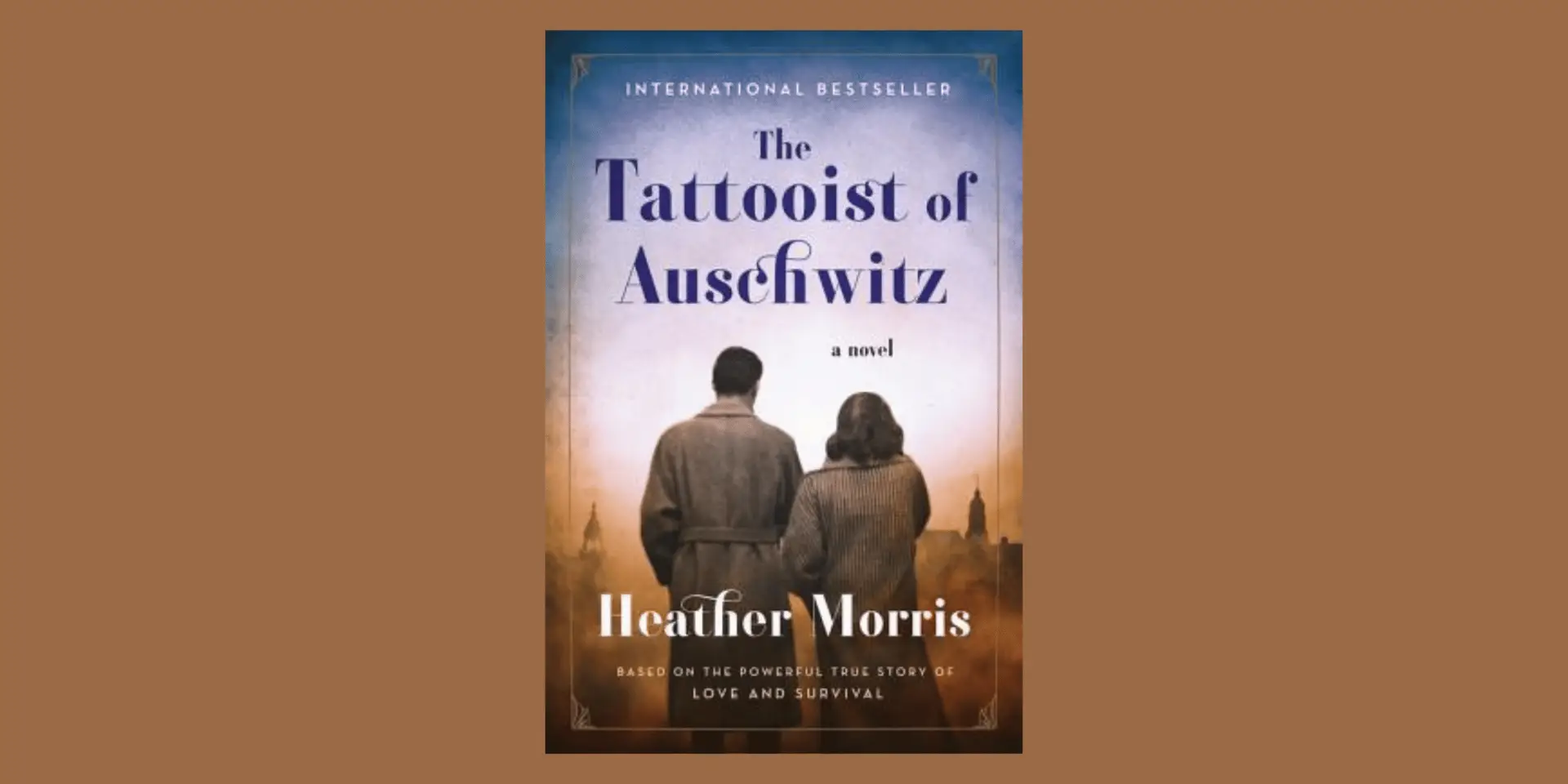
There are books that one reads and forgets, and then there are books that change something quietly inside. The Tattooist of Auschwitz by Heather Morris falls firmly into the second category. Based on the real-life account of Lale Sokolov a Slovakian Jew who survived the horrors of the Auschwitz-Birkenau concentration camp this novel has captured the hearts of millions of readers around the world since its publication. It is a story about love, resilience, and the extraordinary lengths a human being will go to in order to protect those they care for.
For anyone searching for the best Auschwitz books by Heather Morris, or those curious about the broader spectrum of historical fiction books for readers
who want deeply human stories, this detailed review offers an honest and thorough look at the novel, its themes, its controversy, and why it continues to resonate so powerfully in 2026.
Who Is Heather Morris? Understanding the Author Behind the Story
To truly appreciate this novel, one must first understand Heather Morris. Born in New Zealand and later based in Australia, Morris spent years working as a hospital administrator and social worker before she began writing. Her background in listening to people truly listening became the cornerstone of her literary career.
The story of how Morris came to write this book is as remarkable as the book itself. Over the course of three years, she sat with Lale Sokolov and recorded his memories memories he had kept guarded for decades. He chose her because he trusted her, and that trust produced one of the most widely read works of historical fiction of the 21st century. Morris transformed a survivor’s testimony into a narrative that balances personal memory with emotional truth.
For those who have been moved by this book and want to explore more, understanding Heather Morris’s expanding body of work is a natural next step, and that journey begins right here with Lale’s story.
What The Book Is About
The Tattooist of Auschwitz tells the story of Lale Sokolov, a young Jewish man from Slovakia who arrives at Auschwitz in April 1942. Due to his ability to speak multiple languages, he is appointed as the Tätowierer—the tattooist responsible for tattooing identification numbers onto the arms of incoming prisoners. It is a role that grants him small privileges, such as extra rations and separate sleeping quarters, but also forces him to carry a heavy moral burden.
It is during this time that Lale encounters Gita, a young woman whose arm he is assigned to tattoo. In that brief, charged moment, a connection is formed. What follows is one of the most quietly devastating love stories ever told against the backdrop of history’s darkest chapter. Through the years of their imprisonment, Lale uses every resource available to him including trading smuggled gemstones for extra food and medicine to keep Gita alive, always working to survive long enough to build a life together after the war.
How Long Is the Book? A Note on Pages
For readers wondering about page count, the novel runs at approximately 257 to 268 pages depending on the edition. This makes it a relatively compact and fast-paced read given the weight of the subject matter. Morris does not overload readers with exhaustive historical exposition; instead, she keeps the narrative tight and character-focused, drawing readers in through emotional urgency rather than dense academic detail.
An Honest Assessment: Strengths and Controversies
Any honest review of The Tattooist of Auschwitz must acknowledge both its remarkable emotional strengths and the major factual critiques it has received over the years.
What the Book Does Brilliantly
The greatest achievement of this novel is its unwavering focus on human connection. At the heart of the narrative is the insistence that even in the most dehumanizing conditions ever created, love not only survives it acts as a form of rebellion. Lale and Gita’s relationship feels earned, tender, and deeply moving.
Morris’s background as a listener gives the narrative a clean, direct, and unadorned voice. There is no attempt to dress up the camp’s reality in overly ornate literary prose. This restraint gives the emotional beats their full power, as explored in our All the Light We Cannot See review
, which similarly examines how human warmth persists amid wartime devastation. Furthermore, the book succeeds in making the moral complexity of Lale’s position a prisoner given privileged duties feel genuinely uncomfortable and thought-provoking.
The Historical Accuracy Debate
Following its publication, the book sparked considerable debate among historians. A formal historical assessment published directly by the Auschwitz-Birkenau Memorial and Museum Research Center highlighted multiple historical errors in the text. These included incorrect prisoner identification numbers (such as Gita’s serial number), anachronistic medical references (like the availability of penicillin in 1943), and improbable camp logistics.
Critics argue that because the book was heavily marketed as a true story, these inaccuracies risk blurring historical facts. However, supporters and literary scholars emphasize that Heather Morris wrote a work of historical fiction rooted in human memory which is naturally imperfect after decades rather than an academic history textbook.
Key Themes in the Novel
- Love as an Act of Resistance: In a place designed to strip people of their identity and dignity, Lale and Gita’s love is a radical refusal to be destroyed. Every small risk Lale takes is an act of defiance against the machinery of the camp.
- Survival and Moral Compromise: The novel does not shy away from the moral weight of Lale’s role. Readers are left to sit with the uncomfortable truth that surviving under extreme conditions often required ethical compromises that peacetime morality cannot easily evaluate.
- Memory and the Duty to Bear Witness: At its core, the novel highlights the imperative to remember. Lale carried his story for over 60 years before speaking; telling it became his final duty to Gita and fellow victims.
Adaptation & Legacy: The TV Mini-Series
The enduring global popularity of the novel led to a major television event. For visual learners, you can explore the details and official stream listing for the high-profile television adaptation on Peacock’s Official Press & Show Hub.
Starring Jonah Hauer-King as young Lale, Anna Próchniak as Gita, and Harvey Keitel as the older Lale reflecting on his past, the adaptation specifically tackled the tension between memory and history by featuring Heather Morris (played by Melanie Lynskey) directly interviewing the aging survivor. Reviewing the screen adaptation alongside the text offers a fascinating look at how trauma and memory are translated across mediums.
Heather Morris Books in Order: What to Read Next
If you finish The Tattooist of Auschwitz and want to continue exploring similar narratives, Heather Morris has expanded her focus across multiple connected WWII stories:
- The Tattooist of Auschwitz (2018): The foundational story of Lale and Gita.
- Cilka’s Journey (2019): A companion novel following Cilka Klein, a young woman introduced in The Tattooist, who survives Auschwitz only to be sent to a Soviet Gulag.
- Three Sisters (2021): The story of three Slovakian sisters who promise their father they will stay together, navigating Auschwitz and its aftermath.
- Sisters Under the Rising Sun (2023): Expanding beyond Europe, this novel follows women held in Japanese prisoner-of-war camps in Indonesia.
If you enjoy immersive historical settings across different eras, you might also be interested in our Outlander by Diana Gabaldon review
, which covers another globally celebrated narrative anchored in historical survival and romance.
Why Read This Book in 2026?
As the world moves further away from the events of World War II and the last generation of direct Holocaust survivors passes away, personal accounts even those formatted as dramatized fiction take on renewed importance. In an era of quick-consumption media, The Tattooist of Auschwitz serves as an accessible entry point that encourages readers to engage with history, visit memorials, and seek out primary accounts.
Final Verdict: Should You Read It?
Yes, with the right expectations.The Tattooist of Auschwitz is not a formal historical document, nor is it meant to replace non-fiction research. Its prose is functional and direct rather than deeply stylistic. However, as an emotional narrative of survival, devotion, and hope amidst horror, it succeeds completely.
It remains a necessary, deeply moving read that bridges the gap between raw human memory and modern storytelling.




Leave a Reply