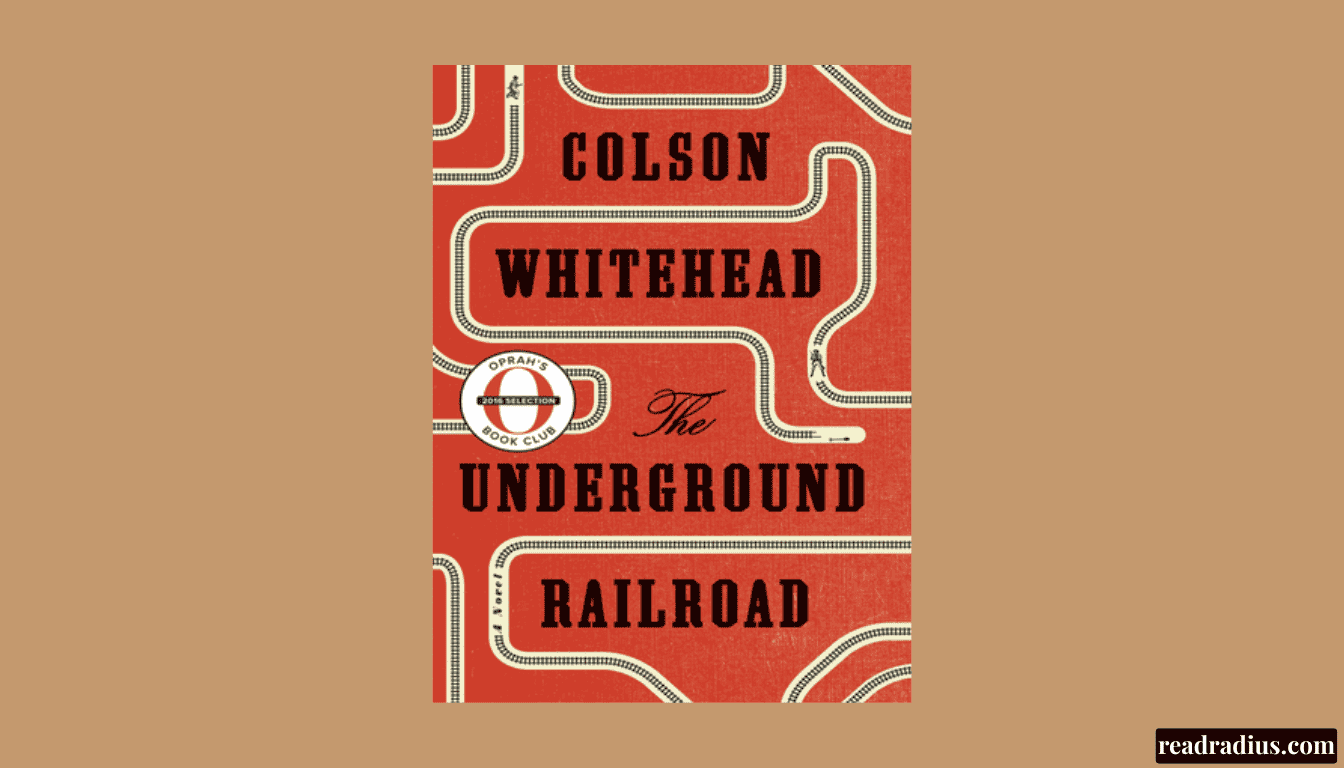
Few historical fiction titles of the last decade have sparked as much conversation as The Underground Railroad by Colson Whitehead. Part slave narrative, part alternate history, part road novel, it takes a piece of American history that most readers think they already understand and turns it completely on its head.
Whitehead’s boldest move is right there in the title. Instead of treating the Underground Railroad as the informal network of safe houses and secret routes that history books describe, he makes it literal: actual tunnels, actual tracks, actual trains running beneath the soil of the American South. That single decision changes everything about how the book reads. It stops feeling like a straightforward history lesson and starts feeling like a strange, haunted piece of speculative fiction that just happens to be rooted in real suffering.
1. Summary: Cora’s Journey
At its core, this is the story of Cora, a young enslaved woman on a Georgia plantation who decides to escape. She’s joined briefly by Caesar, a fellow enslaved man who has heard whispers about a hidden railroad running beneath the ground. What follows is a journey through several states, and each state Cora passes through operates almost like its own self-contained universe with its own rules, its own horrors, and its own brand of false hope.
- South Carolina: Looks progressive on the surface, but hides a chilling, paternalistic agenda.
- North Carolina: Takes a darker, more overtly hostile turn into gothic horror.
- Tennessee: A scorched, plague-ridden, and lawless wasteland.
- Indiana: Offers something closer to community, though even that comes with its own constant dangers.
Throughout it all, a relentless slave catcher named Ridgeway pursues Cora, giving the novel its tense, propulsive momentum. But this isn’t just a chase story—it’s a meditation on what freedom actually means when the ground itself seems designed to swallow it whole.
2. Themes & Craft Analysis
What makes this book linger long after the last page is how directly it confronts brutality without turning that brutality into spectacle for its own sake. Whitehead never lets the reader look away, but he also never lingers gratuitously. Every hard scene serves a larger point: the systems built around slavery constantly adapted and reinvented themselves in different forms across different states.
Playing with History and Genre
The novel plays with the idea of history as something malleable. By blending real historical events with invented ones including deliberate anachronistic details planted throughout each setting Whitehead forces readers to sit with an uncomfortable truth: some of what feels like “historical” cruelty in this book is invented, and some of what feels invented is disturbingly close to documented fact.
From a purely technical standpoint, the structure deserves real credit:
- Structural Variety: Each state Cora visits gets its own tone, pacing, and genre (from dystopian satire to gothic horror), keeping the escape narrative fresh from chapter to chapter.
- Spare Prose: Whitehead’s prose is controlled and unsentimental. He doesn’t overwrite emotional moments, trusting the reader to feel the weight of a scene without being told how to feel.
- Pacing: It moves with the urgency of a thriller while still leaving quiet room for devastating character development.
3. Final Verdict: Why It Resonates & Who Should Read It
Plenty of historical fiction fades from conversation a year or two after release, but The Underground Railroad has endured. Winning both the Pulitzer Prize for Fiction and the National Book Award, it achieves a rare balance: it is a high-stakes page-turner and a serious, layered literary work all at once.
Who Should Read This: It isn’t always an easy read due to its unflinching depictions of violence, but it is an essential one. It is ideal for readers who appreciate speculative historical fiction, form-bending narrative experiments, and thoughtful book club discussions centered on systemic power, complicity, and survival.
Final Thoughts
Cora’s escape is both a physical journey and a deeply philosophical one. By reimagining historical infrastructure, Whitehead reveals how deeply those oppressive systems were embedded into the fabric of American life. It is inventive without losing its emotional core, brutal without losing its purpose, and deeply deserving of its place on any modern reading list.
If you’re building out a broader reading list around this genre, it pairs exceptionally well with other titles covered in Historical Fiction Books: A Reader’s Ultimate Guide.




Leave a Reply