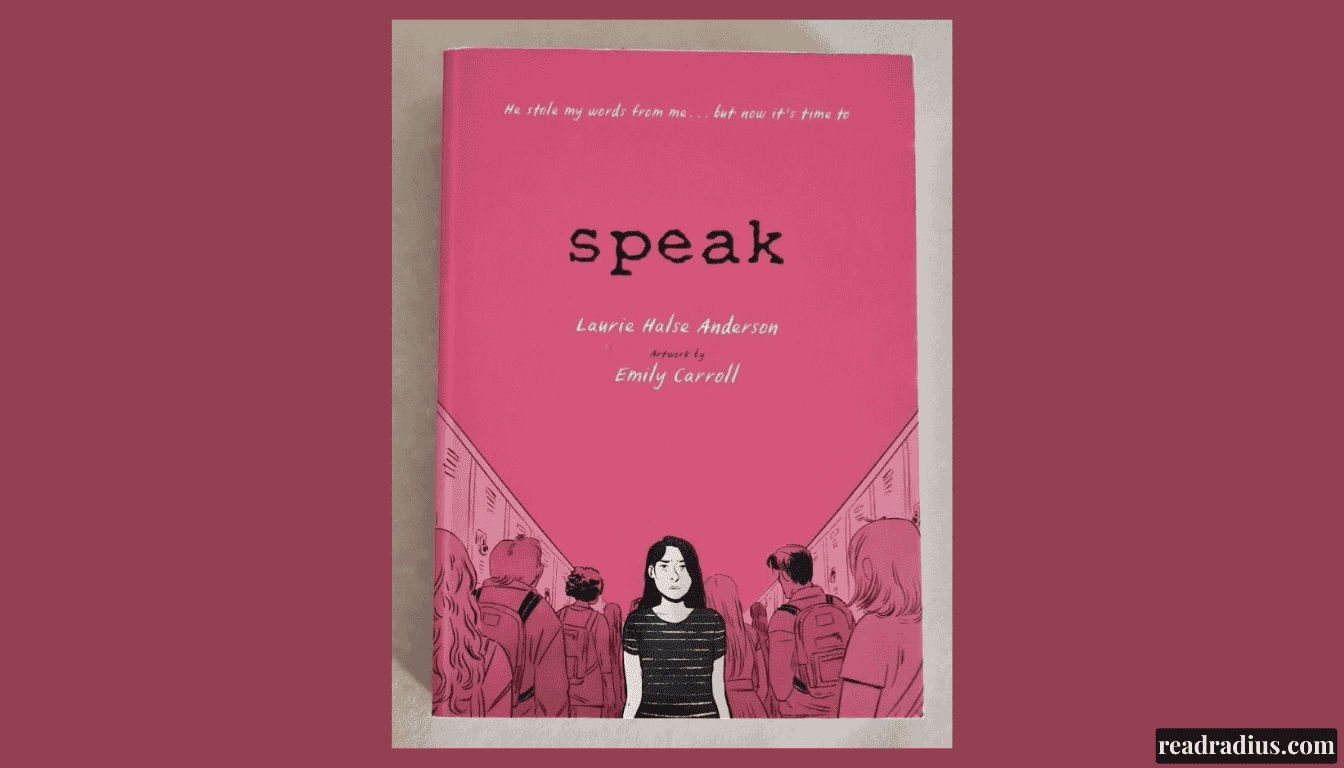
Some books stay with a reader long after the final page, and Speak is one of them. When Laurie Halse Anderson’s groundbreaking novel was adapted into a graphic format by illustrator Emily Carroll, longtime fans wondered whether the emotional weight of the original story would survive the transition. Having sat down with both the prose novel and the illustrated edition side by side, it’s easy to say the graphic version doesn’t just survive it finds new ways to hit home. This article walks through everything readers want to know before picking up a copy, from the artwork to the pacing to how it compares with the author’s other acclaimed work.
Speak: The Graphic Novel Book Review
At its core, this is a story about Melinda Sordino, a high school freshman who stops speaking after a traumatic event at a summer party. The original novel relied on Melinda’s inner monologue to carry the reader through her isolation, and that’s a tricky thing to translate into panels and dialogue. Emily Carroll’s black-and-white illustrations solve this problem elegantly, using shadow, negative space, and shifting panel layouts to show what Melinda can’t say out loud. The result feels less like a companion piece and more like a genuine reinterpretation, one that gives new readers and returning ones a fresh lens on a familiar story.
What stands out most in this format is pacing. Silence is something a novel can only describe, but a graphic novel can actually show it, panel after empty panel, and that visual quiet lands with real force. Readers who found the original text emotionally heavy will notice that the artwork carries some of that weight differently, sometimes gently, sometimes starkly, but always with intention.
What Makes This Speak Graphic Novel Review Different
Plenty of reviews cover the plot beats, but fewer talk about how this book actually feels to read in one sitting. Based on firsthand reading experience, the pacing rewards patience. The first act moves slowly and deliberately, mirroring Melinda’s withdrawal from the people around her, while the later chapters pick up momentum as she begins reclaiming her voice through art class. That structural choice mirrors the emotional arc almost perfectly, and it’s something that becomes clearer on a physical read-through than in any plot summary.
Another detail worth mentioning: the trim size and paper quality of the print edition make a real difference. The full-bleed illustrations lose impact on a cramped screen, so readers who can get their hands on a physical copy will likely get more out of the experience than those reading digitally.
A Look Inside: Speak Graphic Novel Preview
For anyone who wants a preview before committing, most major retailers and the publisher’s own site offer a look at the opening chapters, including the now-iconic first-day-of-school sequence. That preview alone gives a strong sense of the tone: quiet, tense, and visually sparse in a way that pulls readers in rather than pushing them away. It’s a smart marketing choice, since the opening pages do a great job of showing exactly what kind of reading experience the rest of the book delivers, without giving away the more difficult moments that come later.
Teachers and librarians building classroom libraries often use this preview to decide whether the book fits their curriculum or reading level, and it holds up well for that purpose too. The pacing and content make it appropriate for older middle schoolers through adult readers, though as with the original novel, some content warnings around sexual assault are worth flagging in advance.
Other Books by the Author of Speak Anderson Novel
Laurie Halse Anderson has built a career on stories that treat teenagers with honesty and respect, even when the subject matter is difficult. A few of her other well-known works include:
- Wintergirls – a raw, unflinching look at disordered eating told through a fractured, poetic narrative style.
- Chains and its sequels in the Seeds of America trilogy historical fiction following a young enslaved girl during the American Revolution.
- Shout – Anderson’s memoir written in verse, which expands on her own experiences and the impact Speak has had on readers over the years.
- Catalyst and Prom – lighter, character driven contemporary novels set in the same fictional town as Speak.
Readers who connect with the themes in Speak: The Graphic Novel will likely find a lot to appreciate across the rest of Anderson’s catalog, since her body of work consistently centers young voices navigating trauma, identity, and resilience.
Should You Read the Speak Graphic Novel?
For readers who loved the original novel, this adaptation is worth the time. It doesn’t replace the prose version so much as sit alongside it, offering a different way into the same story. For readers who haven’t experienced Speak in any format yet, the graphic novel is arguably one of the most accessible entry points available, especially for visual learners or reluctant readers who might not otherwise pick up a dense prose novel.
It’s not a light read, and it isn’t meant to be. But it handles a difficult subject with care, restraint, and a surprising amount of hope by the final pages. That balance is rare, and it’s a big part of why both the original and this adaptation have earned a lasting place on school reading lists and personal bookshelves alike.
Frequently Asked Questions
Is the Speak graphic novel appropriate for teens? Yes, though it deals with sexual assault, so many educators recommend it for older middle school readers and up, alongside some guidance or discussion.
Do you need to read the original novel first? No. The graphic novel stands on its own, though longtime fans of the original will likely notice extra layers in how the artwork reinterprets certain scenes.
Who illustrated the Speak graphic novel? Emily Carroll, known for her atmospheric, shadow-heavy art style, adapted Laurie Halse Anderson’s text into the graphic format.
explore more YA graphic novel recommendations



Leave a Reply