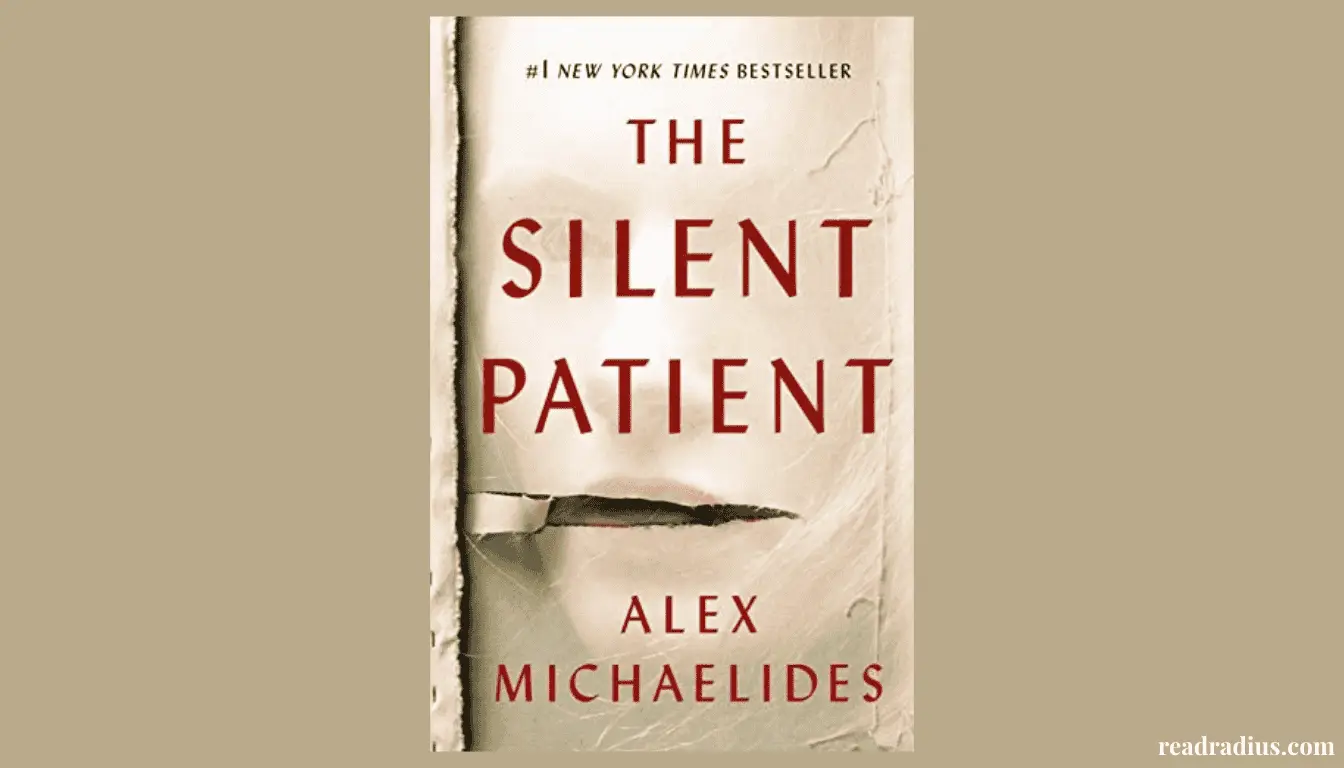
A woman shoots her husband five times, then never speaks again. That single, chilling idea powers one of the most talked-about thrillers of the past decade. Readers who pick up the silent patient novel by Alex Michaelides often finish it in a day or two, because the pages seem to turn themselves. The book has also drawn hundreds of thousands of reader ratings on Goodreads, which shows how widely it has travelled.
This review covers the premise, the characters, the writing style and the ending, with a clearly marked spoiler section for those who have already finished.
Book The Silent Patient Review: The Short Verdict
Alex Michaelides’ debut is a fast, twisty psychological thriller with a clever hook and an ending that sends readers flipping back to the first chapters. It is not a deep literary study, and some readers find its characters thin. Still, it delivers what it promises: tension, mystery and a final reveal that lands. You can find the full publication details on Wikipedia if you want the background on its release and reception.
Quick snapshot
- Genre: Psychological thriller
- Length: Around 330 pages in most editions
- Pace: Fast, with short chapters
- Best for: Fans of twisty, character-driven mysteries
- Spoiler-free rating: 4 out of 5
What Is the Story About?
Alicia Berenson is a celebrated painter whose life looks perfect from the outside. One evening, her husband Gabriel is found shot, and Alicia is found beside him, silent. She is committed to a secure psychiatric unit called The Grove, and she does not say a word for six years.
Enter Theo Faber, a psychotherapist who becomes obsessed with her case. He takes a job at The Grove, determined to make Alicia talk. The story moves between Theo’s present-day narration and Alicia’s diary, a structure that keeps readers guessing about who is telling the truth. This push and pull makes the book a good example of the unreliable narrator technique, where the storyteller cannot be fully trusted.
The Silent Patient Book Reading Experience
Many readers describe the silent patient book reading experience as hard to pause. The chapters are short, and nearly every one ends on a small hook. A seasoned thriller reader will notice how carefully the author controls information, giving just enough to feed suspicion without giving the game away.
The writing is clean and easy to follow. There are no dense passages to wade through, which makes the book a good pick for a weekend, a flight or a reading slump. Readers who enjoy therapy-room scenes will also appreciate the psychological detail, which is accessible rather than technical.
Main Characters Worth Knowing
- Alicia Berenson: A gifted artist whose silence is both her defense and her mystery. Her self-portrait, titled Alcestis, nods to the Greek tragedy by Euripides and becomes a central clue.
- Theo Faber: The narrator, who is eager to help but carries troubles of his own.
- Gabriel Berenson: Alicia’s fashion-photographer husband, seen mostly through memory.
- Professor Diomedes: The head of The Grove, whose role gets clearer as the story unfolds.
The Silent Patient Book Explanation: The Twist Unpacked
Spoiler warning: The next section reveals the ending. Skip ahead if you have not finished the book.
For readers who want clarity, here is the silent patient book explanation. Theo is not the neutral helper he appears to be. His fixation on Alicia began long before he joined The Grove. He was connected to the night of Gabriel’s death, and his motives are tied to his own personal pain and jealousy.
Alicia’s silence, then, is not simply a symptom of guilt. It is a response to trauma, shaped by a painful childhood and by what she endured that night. Once the truth comes out, the diary entries and Theo’s narration take on a different meaning. Rereading the first few chapters after finishing is a satisfying experience, because the clues were there all along.
Themes That Stay With You
- Silence as a language: What people refuse to say can speak louder than words.
- Trauma and its aftershocks: Childhood wounds shape adult choices in both lead characters.
- Obsession: Helping someone and controlling them can look dangerously similar.
- Art as confession: Alicia’s painting says what she cannot.
Strengths and Weaknesses
What works well
- A strong, memorable hook
- Tight pacing and short chapters
- A twist that feels earned
- Accessible writing for all kinds of readers
What may not work for everyone
- Some characters feel underdeveloped
- The middle section may feel slower to those who guess the twist early
- The therapy elements are simplified for the sake of story
Who Should Read This Book?
This thriller suits readers who like unreliable narrators, puzzle-box plots and quick reads. If slow-burning literary fiction is your preference, you may find it lighter than expected. If you want a page-turner that rewards a second look, it is an easy recommendation. You can read more about the author and the book on the publisher’s page at Macmillan.
Final Thoughts
The Silent Patient earns its popularity. It is clever, gripping and easy to enjoy, even if it is not flawless. Readers who like it should consider continuing with more character-driven fiction, such as The Girl I Was by Jeneva Rose Book Review for another tense, emotional story, or Hilary Mantel’s Wolf Hall Trilogy by Hilary Mantel Book Review for a richer, more historical reading experience.





Leave a Reply