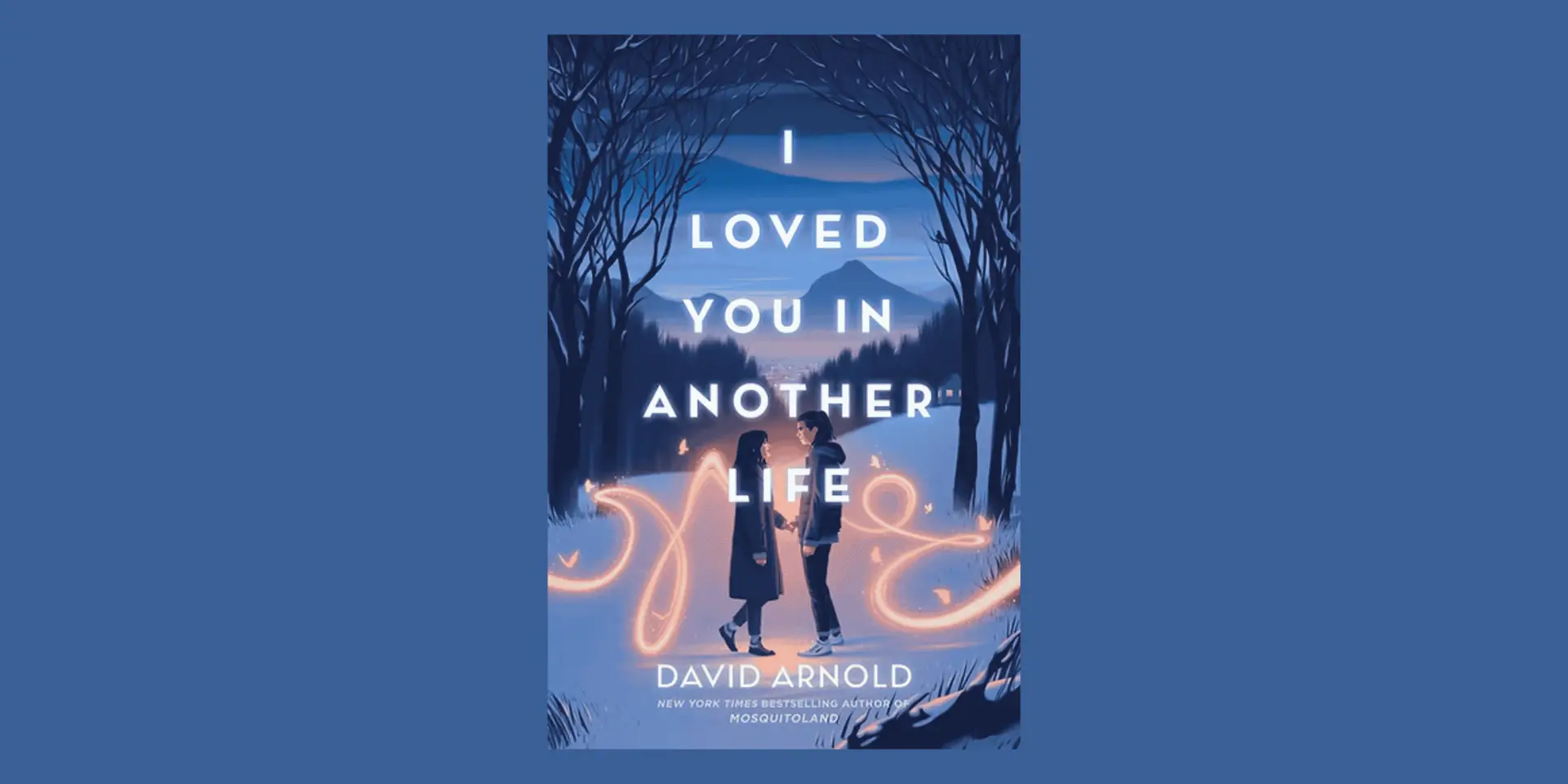
Some books feel like they were written specifically for a certain kind of reader the ones who believe love is bigger than time, who cry at songs they have never heard before, and who stay up until 2 a.m. finishing a story even when they know the ending will gut them. I Loved You in Another Life by David Arnold is that kind of book.
Published on October 10, 2023, by Viking Books for Young Readers, this is Arnold’s fifth YA novel and, by his own admission, the most vulnerable book he has ever written. It became both a New York Times and USA Today bestseller and once you read it, you will understand exactly why.
But it is not a perfect book. It is slow in places, polarizing in its structure, and some readers put it down before they reach the part that changes everything. This review covers all of it the highs, the lows, and the specific type of reader this story was made for. If you find yourself drawn to stories where destiny and timelines collide, you should also check out these YA Time Travel Books You Need to Read for more mind-bending journeys.
Book at a Glance
What Is I Loved You in Another Life About?
The premise sounds simple. Two teenagers in the same town both start hearing a mysterious song that no one else can hear. That song gradually pulls them toward each other. When they finally meet, they feel something impossible a bone deep recognition, as though they have known each other before. Because, as the story reveals, they have. Across centuries. Across continents. Across lives.
Evan Taft has had a rough year. His dad walked out, leaving him to help hold together a household with a grieving mother and a seven-year-old brother who copes with everything by obsessing over E.T. Evan himself deals with panic attacks he calls them storms and was working through everything in therapy while saving up for a gap year in Alaska. Then his mom gets a cancer diagnosis, and Alaska disappears as a possibility. The song begins to find him right at this lowest point.
Shosh Bell is the kind of person everyone expects great things from. High school theatre legend, USC performing arts school acceptance already in hand, a future that looked like a straight line toward everything she worked for. Then a drunk driver kills her older sister Stevie her best friend, her whole world and that straight line cracks apart. Shosh turns to alcohol to fill the silence Stevie left behind. She too begins to hear the song.
What makes this book structurally unique is the third thread woven between their chapters. Short interstitial sections pull the reader out of the present day and into other eras: 1832 Paris, 1953 Tokyo, a remote stretch of the Shetland Islands, future Oslo in 2109. In each of these moments, we see souls not necessarily named Evan and Shosh, but clearly them finding each other and losing each other, over and over. A celestial bird appears in every timeline as a silent, cosmic witness.
And running through all of it, connecting every era and every incarnation, is the music. Written and recorded by Arnold himself under the name Neon Imposter, the songs exist in the real world. You can listen to them. That detail alone makes this book unlike anything else in YA right now.
From the Book
“Silence and sadness are not the same things. And I wish more people understood that, is all.”
David Arnold, I Loved You in Another Life
Meet the Author: Why David Arnold Was the Only Person Who Could Write This Book
David Arnold did not set out to become a novelist. He grew up in a musical household, mastered multiple instruments, moved to Nashville straight out of college, and spent years working as a freelance musician and producer. Music was not just a hobby it was his entire identity.
Life redirected him. He became a stay-at-home dad, started writing during his son’s nap times, and eventually produced his debut novel Mosquitoland in 2015. It became a bestseller. He won the Southern Book Prize and the Great Lakes Book Award. His books have since been translated into more than twelve languages.
But I Loved You in Another Life is the book where his two lives musician and novelist finally became the same thing. The songs that Evan and Shosh hear are not fictional. Arnold wrote them, recorded them, and released them. His background as a musician taught him, in his own words, that “an honest voice is more compelling than a pretty one.” That lesson saturates every page of this novel.
His previous books include Kids of Appetite (2016), The Strange Fascinations of Noah Hypnotik (2018), The Electric Kingdom (2021), and most recently Luminous Beings (2024, co-authored with Jose Pimienta). Each one carries his signature blend of lyrical prose, dark humor, and emotional gut punches. But this one hits different.
Characters That Stay With You
Evan Taft
Evan is the kind of male YA protagonist we do not get nearly enough of emotionally articulate, in therapy without shame, and deeply tender with the people he loves. His anxiety is not a plot device. Arnold writes panic attacks with a specificity that feels lived-in. Evan describes them as storms, and that metaphor works because storms do not care about your schedule or your plans. They just arrive.
His relationship with his little brother Will is the emotional backbone of his entire storyline. Will is seven years old, fiercely attached to E.T., and written with so much care and warmth that you will want to protect him from the entire universe. The scenes between Evan and Will carry more emotional weight than almost anything else in the book.
Shosh Bell
Shosh is harder to love at first, and that is entirely intentional. Grief has made her reckless and self-destructive. Her alcohol dependency is written without romanticization it is uncomfortable to read, and it is supposed to be. Arnold does not let her off the hook, but he also never stops treating her with compassion.
Her anchor is Ms. Clark, her former drama teacher, who keeps showing up even when Shosh makes it difficult. Their relationship is one of the quieter triumphs of this book a mentorship written with the kind of warmth that makes you think Arnold has known a teacher like that himself.
The detail that broke me most: Shosh and Stevie had planned to get matching Frog and Toad tattoos with the phrase “alone together” beneath them. Shosh gets hers done after Stevie dies. One half of a pair that will never be complete. That image does not leave you.
The Supporting Cast
Ali, Evan’s best friend, deserves her own novel. She is funny, fierce, and deeply loyal, and Arnold writes their friendship as something entirely distinct from romance a relief in a genre that often mistakes closeness for romantic tension. Ali loves Evan completely, and it has nothing to do with attraction. That kind of platonic devotion is rare on the page.
Themes That Make This Book More Than a Romance
On the surface, I Loved You in Another Life is a love story. Underneath, it is a book about what we do when the life we planned stops being available.
Both Evan and Shosh arrive at the story with futures they believed in. Alaska. USC. Gap years and acceptance letters and plans made with the people they loved. Life destroys those plans without asking permission. What Arnold explores quietly, without ever becoming preachy is how identity survives that kind of wreckage. Who are you when the version of yourself you worked toward no longer exists?
The grief in this book is not decorative. It is the engine. Evan grieves his father, his plans, and the version of his family he thought he had. Shosh grieves her sister, her future, and the self she was when Stevie was still alive. They do not heal by falling in love. They heal by being seen first by themselves, then by each other.
Music runs through all of it as something close to a spiritual force. Arnold’s musical background shapes the entire philosophy of this book: that certain frequencies exist outside of time, that some things can travel between lives the way a melody travels between strangers who have never met and still recognize the tune. It is a beautiful idea, and Arnold earns it.
The recurring image of the celestial bird works in the same way. It does not need to be explained. It is simply there, in every timeline, watching a reminder that something is threading these lives together whether the people inside them can see it or not.
Writing Style and Structure: What Makes This Book Different
Arnold writes in alternating first-person chapters one for Evan, one for Shosh and the two voices are genuinely distinct. Evan’s chapters have a dry, observational humor that makes you laugh even when the subject matter is devastating. Shosh’s chapters are rawer, more chaotic, more reactive. You always know whose head you are in.
The past life interludes break that pattern in a way that either deepens the reading experience or disrupts it, depending on the reader. They are written in third person, often in short bursts, and they do not announce themselves as Evan and Shosh. You have to feel it. Some readers find that ambiguity frustrating. Others the ones this book is truly for find it exactly right.
Publishers Weekly gave the book a starred review and called Arnold’s prose “both lyrical and devastating.” Booklist also awarded a starred review and described it as “achingly human.” Kirkus noted the pop culture references as a concern for longevity, which is a fair and honest critique. The book name drops enough contemporary touchstones that a reader in ten years might feel mildly lost but in the present tense, those references make Evan and Shosh feel like real teenagers in a real world, which is exactly the point.
The pacing is the most divisive element of the structure. Evan and Shosh do not meet for a significant portion of the book. If you need immediate romantic chemistry to stay engaged, this will test your patience. If you are the kind of reader who enjoys sitting with characters before they collide, this slow build will pay off in ways that genuinely surprise you.
Final Verdict: Is I Loved You in Another Life Worth Reading?
Yes. With one important caveat: you have to be the right reader for it.
This is not a book that meets you halfway. It demands patience, emotional availability, and a willingness to follow characters who are genuinely struggling before they find any light. The slow build before Evan and Shosh meet is real. The grief is heavy. The past-life chapters ask you to trust Arnold without fully explaining themselves.
But if you give this book what it asks for, it gives back enormously. The prose is some of the most beautiful writing in recent YA fiction lines that stop you mid-sentence because you need to sit with them. The music concept is completely original and the fact that you can actually go listen to those songs after finishing the book is the kind of detail that turns a good reading experience into a lasting one. The characters especially Will and Ali earn your love completely.
The ending is not the sweeping, grand romantic finale some readers want. It is quieter than that. But it is also, somehow, more hopeful. Arnold is saying something specific: that love at this scale does not need a perfect conclusion in a single lifetime. It just needs to keep finding its way back. The ending earns that claim instead of just asserting it.
David Arnold set out to write his most vulnerable book. He succeeded.
4
out of 5
Our verdict: I Loved You in Another LifeBest for readers who love lyrical prose, grief-driven character arcs, and the idea that some connections are bigger than a single lifetime. Not the book for readers who need fast pacing or a central romance that takes up most of the page. But for the right reader, this one will stay with you for a very long time.
To see what other readers are saying or to add it to your own shelf, you can find the book and its community reviews on Goodreads.


Leave a Reply