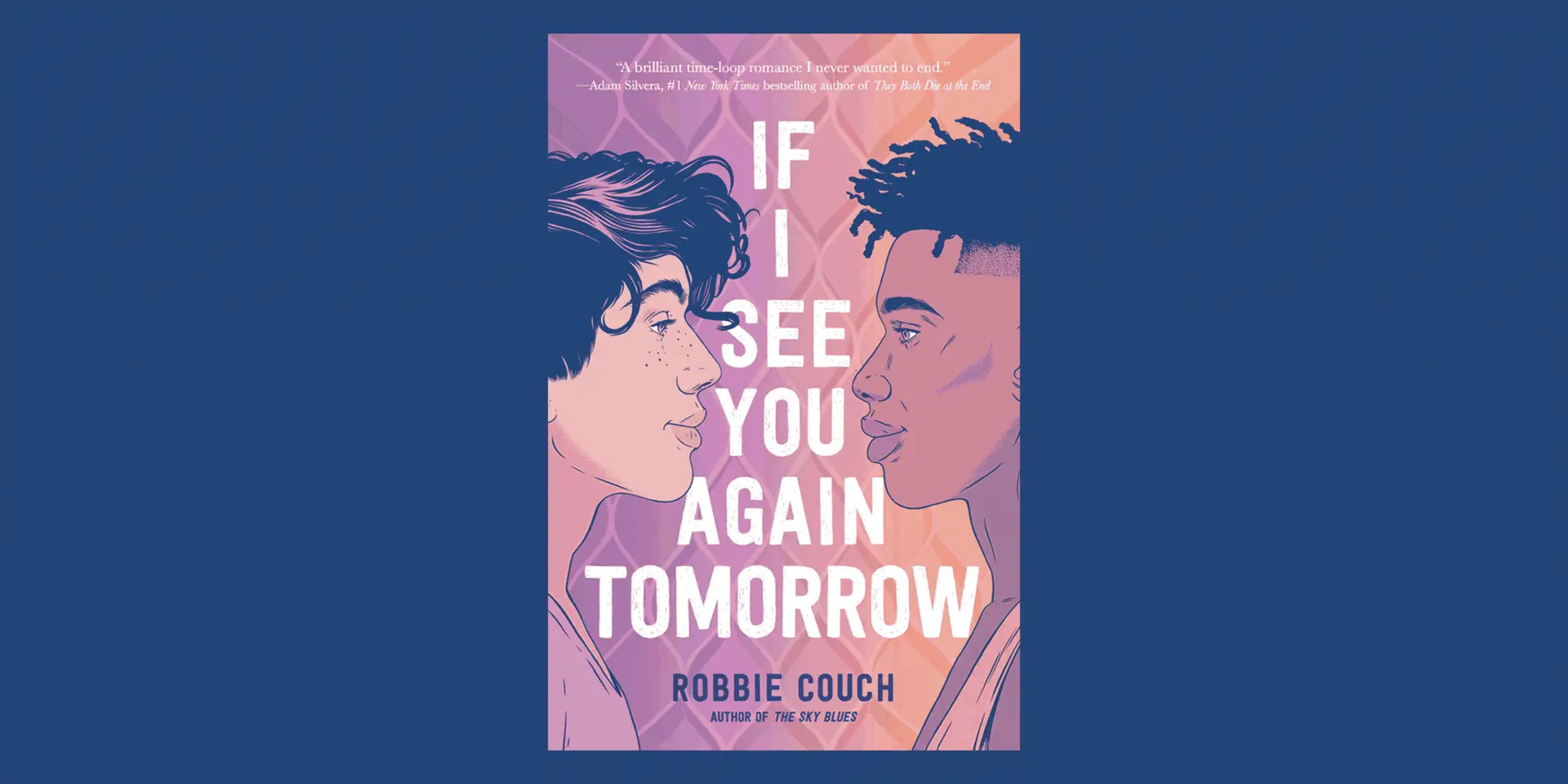
I almost skipped this one. The cover is soft and a little dreamy, and I have been burned before by time-loop romances that turn out to be all concept, no heart. Then a friend whose taste I trust basically threw it at me and said, “just start it.” I read the first three chapters on a Sunday afternoon and did not stop until the book was finished. That almost never happens to me anymore. So here is my honest If I See You Again Tomorrow review, and I will tell you exactly why this book worked so well and where it stumbles just a little.
Book at a Glance
What Is If I See You Again Tomorrow About?
Clark is seventeen years old and he has been living the same Monday September 19 for 309 days in a row. He woke up inside a time loop and never figured out how to get out of it. At first, that sounds like a dream: no consequences, no rules, no tomorrows to worry about. But by day 309, the novelty is completely gone. His best friend moved to Texas. His parents split up. And every single person around him resets each morning with no memory of anything. Clark is utterly alone, even in a room full of people.
Then comes day 310, and something shifts. A boy named Beau walks into his trigonometry class. Clark has never seen him before not once across all 309 previous Septembers. Beau is chaotic and warm and impossible to ignore, and without really thinking about it, Clark follows him out of school and into a strange, unplanned day across Chicago. By the end of that afternoon, Clark is falling fast. The problem is that when day 311 arrives, Beau is nowhere to be found. Clark spends the rest of the book chasing him and uncovering a mystery that is bigger than either of them expected.
If you enjoy the time-loop premise here, you will probably want more of the same. We have a full reading list of the [Best YA Time Travel Books You Need to Read] that is worth bookmarking alongside this one.
This Is Not Really a Romance And That Is the Point
Every review I read before picking this up called it a YA romance. That framing is technically accurate but slightly misleading, and I think it sets some readers up for disappointment. Yes, Clark falls for Beau. Yes, that relationship drives the plot forward. But this is primarily a story about loneliness and what it takes to actually let other people in.
Clark’s therapist gives him four tips for beating loneliness early in the book, and those four steps quietly become the spine of the entire narrative. As Clark works through them, we watch him learn how to be vulnerable with people who cannot even remember him the next morning. That is a genuinely interesting emotional puzzle, and Robbie Couch uses the time loop to explore it in ways a conventional contemporary story simply could not.
The side characters carry a lot of this weight. Because Beau keeps disappearing, Clark spends much of the book connecting with the people Beau knows retracing their shared day, one errand at a time. Those secondary connections end up being some of the most moving parts of the book. Some of them carry emotional backstories that genuinely surprised me.
Quotes from the Book
“How do you build a future with someone if you can never get to tomorrow?”
— If I See You Again Tomorrow · Official Publisher Tagline
“Clark is trapped in today. Literally. And he has to admit that being stuck in a never-ending time loop is getting pretty lonely.”
— Narrator, Chapter 1
“It promises possibility without pretending any of it is easy.”
— Goodreads Community Review (frequently highlighted passage)
“Sometimes dreamy, sometimes nightmarish a brilliant time-loop romance you never wanted to end.”
— Adam Silvera, #1 NYT Bestselling Author of They Both Die at the End
“Fresh, engaging, funny, and heartwarming expertly paced with a satisfying mix of romance, sleuthing, sci-fi, humor, and coming-of-age themes.”
— Booklist, Starred Review
If I See You Again Tomorrow Review What Robbie Couch Gets Right
The Mental Health Representation Feels Real
Couch handles Clark’s therapy sessions with real care. The sessions do not feel like PSA moments dropped in to tick a box. They feel like actual therapy a teenager saying a difficult thing out loud for the first time and having it quietly change the direction of his life. As someone who has read plenty of YA that handles mental health clumsily, this stood out immediately. Couch writes about loneliness without romanticizing it, and he writes about connection without making it feel easy.
The Pacing Is Smarter Than It First Appears
The novel moves slowly through the middle section, and a few readers find that frustrating. I actually think it is the right call. The slow accumulation of daily repetition is the whole point. By the time the plot accelerates in the final third, you feel the momentum shift in a way that would not land nearly as hard if the setup had been rushed. Each mystery that resolves opens up a new one, which keeps you reading even when nothing dramatic is happening on the surface.
The Chicago Setting Is a Character
The book functions almost as a love letter to the city. Clark and Beau move through Chicago with the kind of specificity that makes you want to pull up a map. This grounds the fantastical premise in something tactile and real, and it gives the book a sense of place that a lot of YA romances skip entirely.
The Ending Is Brave
I will not spoil it. But the final pages take a creative risk that some readers will find unsatisfying and others will find perfect. I landed firmly in the second camp. The book’s willingness to leave something unresolved felt honest to its own themes in a way I genuinely respected.
Where the Book Falls a Little Short
The romance is the weakest part, and that is worth saying plainly. Clark and Beau spend meaningful time together only on day 310. Everything after that is Clark piecing Beau together from secondhand stories and brief glimpses. By the time they confess feelings for each other, you believe Clark’s emotions completely but Beau himself remains slightly out of focus. If you pick this up expecting a full slow-burn love story with equal page time for both characters, you may come away wanting more.
Clark’s narration also reads as younger than seventeen at times. His logic can feel a little naive, even when it is clearly intentional. That is a minor thing, but it is worth flagging for readers who gravitate toward YA with older-feeling protagonists.
Who Should Read This Book?
Read this if you loved They Both Die at the End and want something with a similar emotional gut-punch but a lighter touch. Read this if you are drawn to stories about mental health that do not feel preachy. Read this if you want a mystery wrapped inside a love story wrapped inside a coming-of-age novel, and you are okay with those three things never fully separating from each other.
For a broader look at what the community thinks, the Goodreads page for If I See You Again Tomorrow has thousands of reader reviews across every reading mood useful if you want to gauge community reaction before committing.
Skip this one if you need your romance front and center, or if slow-build narratives tend to lose you before they pay off.
Final Verdict
If I See You Again Tomorrow is one of those books that is genuinely smarter than its premise suggests.
Robbie Couch uses the time-loop device not as a gimmick but as a precise tool for exploring isolation, therapy,
and the terrifying act of letting someone new into your life. Clark is a protagonist you root for from page one,
and the Chicago setting gives the whole story an energy that never quite lets you relax. The romance could use
more page time for Beau, and the ending will divide readers but that creative courage is exactly what makes
the book worth reading in the first place. A New York Times bestseller for very good reason.
Recommended for: Fans of Adam Silvera, YA LGBTQ+ fiction, mental health narratives done right,
and anyone who has ever felt invisible in a room full of people.
If you love to read more books like If I See You Again Tomorrow, here are Best YA Time Travel Books You Need to Read .



Leave a Reply