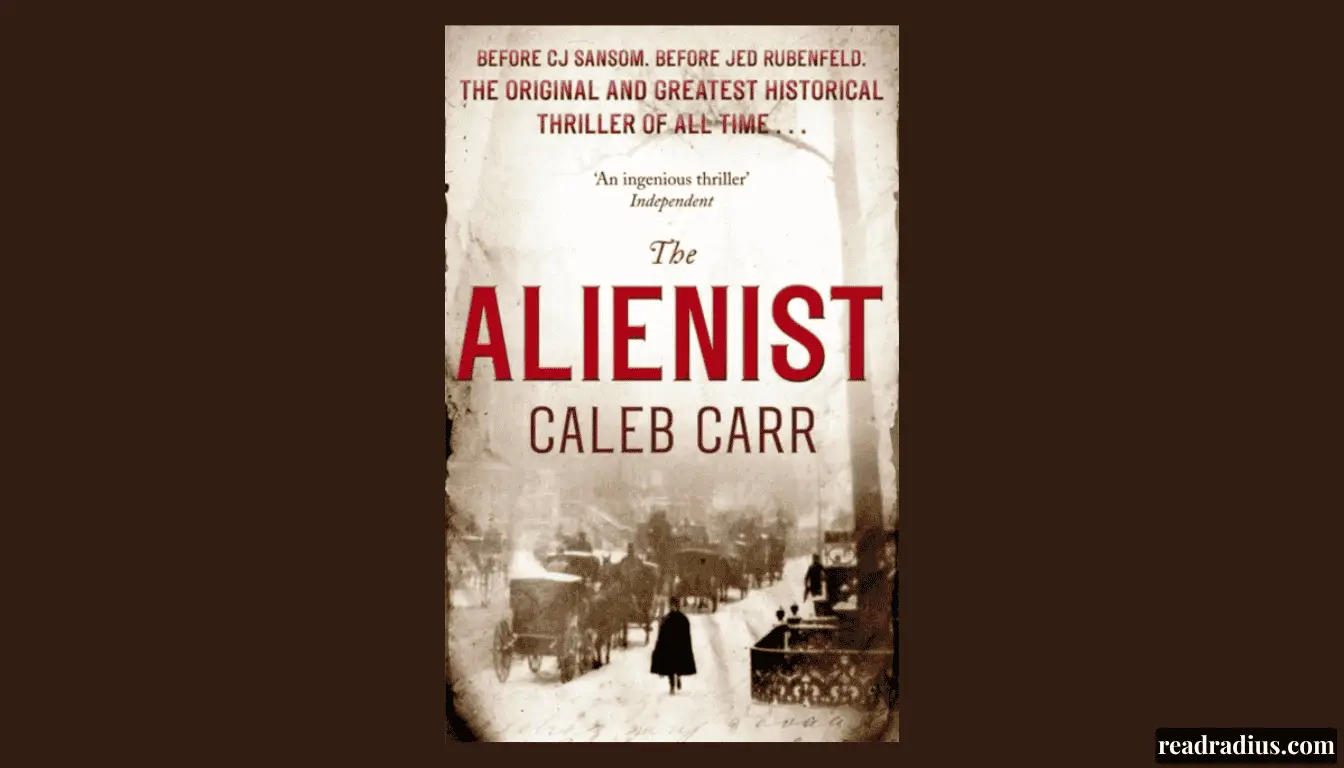
There’s a particular kind of book that stays with a reader long after the final chapter closes, and for many people, The Alienist is exactly that book. Set in the fog-choked streets of 1896 New York, this novel blends true-crime tension with historical detail so rich it feels like a guided tour through the city’s underbelly. This review looks at what makes the book work, where it stumbles, and why it still holds up decades after its release.
The Alienist Caleb Carr Book Review: What the Story Is Actually About
At its core, this is a detective story with a twist. Instead of a traditional police procedural, the narrative follows Dr. Laszlo Kreizler, an “alienist” the period term for a psychologist — who is recruited to help track down a killer targeting young boys in New York City. The investigation unfolds through the eyes of newspaper reporter John Schuyler Moore, which gives the story an observational, almost journalistic quality that pulls readers deeper into the mystery with every chapter.
What sets this apart from other crime novels of its era is the way psychology becomes the actual investigative tool. Kreizler doesn’t rely on physical evidence alone; he builds a profile of the killer’s mind, which was a genuinely new approach to crime fiction when the book first appeared. Readers who enjoy character-driven mysteries tend to find this angle far more satisfying than a straightforward whodunit.
The Alienist Book 1 Caleb Carr: Where It Fits in the Bigger Picture
This title is the first entry in what became known as the Alienist series, and it’s the one most readers start with for good reason. The story stands entirely on its own, so there’s no need to hunt down prequels or companion material before diving in. Once readers finish it, many move straight into the sequel, The Angel of Darkness, drawn back by the same cast of characters and the same meticulous period detail.
Among caleb carr books alienist series fans, there’s a common thread of praise for how consistent the tone stays across the two novels. The world-building doesn’t feel diluted in the follow-up, and the central relationships carry forward in a way that rewards readers who commit to the full series rather than treating the first book as a standalone experiment.
Setting and Atmosphere: New York City as a Character
One of the strongest elements of the novel is its setting. Caleb Carr clearly did his homework, and it shows in every scene. Gaslit streets, tenement housing, the grinding poverty faced by immigrant families, and the early struggles of forensic science all come together to create a New York that feels lived-in rather than sketched. Readers with an interest in American history will likely recognize real figures woven into the plot, including a young Theodore Roosevelt in his role as police commissioner, which adds a layer of authenticity that pure fiction often lacks.
This attention to period detail is part of why the book continues to resonate with readers looking for historical fiction with real substance behind it. It doesn’t just borrow the aesthetic of the 1890s; it uses the era’s social tensions, class divides, and scientific limitations as engines that drive the plot forward.
Pacing and Readability: The Honest Trade-Offs
No review would be complete without addressing the pacing, since it’s the one area where opinions genuinely split. The middle section moves slowly, weighed down by dense historical exposition and lengthy dialogue about psychological theory. Readers expecting a fast-moving thriller from page one may find themselves frustrated during this stretch. That said, patience pays off. The final third accelerates sharply, and the payoff for sticking with the slower buildup feels earned rather than rushed.
From personal experience working through this book, the trick is to treat the early chapters less like a thriller setup and more like a slow immersion into a world. Once that shift in expectation happens, the pacing stops feeling like a flaw and starts feeling like a deliberate choice that mirrors how a real investigation unfolds — methodically, with false starts and dead ends along the way.
Caleb Carr the Alienist Review: Strengths and Weaknesses at a Glance
Strengths:
- Deeply researched historical setting that never feels like a lecture
- A genuinely original detective figure in Dr. Kreizler
- Strong ensemble cast, particularly the female lead, Sara Howard, who breaks from typical period-piece gender roles
- A conclusion that ties the psychological and procedural threads together satisfyingly
Weaknesses:
- Slow pacing through the middle third
- Some readers may find the violence and subject matter genuinely disturbing, given the nature of the crimes
- Secondary characters occasionally feel underused given how compelling they are on introduction
Taken together, these trade-offs explain why this novel earns strong praise rather than universal, unqualified love. It’s a book that asks for patience and rewards readers who give it.
What Other Readers Are Saying
Checking the the alienist caleb carr goodreads page is a useful next step for anyone weighing whether to commit to this book. The consensus among readers there echoes much of what’s covered in this review: strong atmosphere, a memorable central mystery, and a slower pace that some readers love and others find testing. Community reviews are a good gauge for setting expectations before starting the book, especially for readers who are more sensitive to pacing than plot complexity.
Final Verdict
This novel earns its reputation as a standout in historical crime fiction. It isn’t a light read, and it doesn’t try to be. What it offers instead is a fully realized world, a fascinating central character, and a mystery that rewards close attention. Readers who enjoy historical fiction with genuine depth, or true-crime fans curious about the early days of criminal psychology, will likely find this one worth the time investment.
For readers who finish this book and want more in a similar vein, exploring other Historical Fiction Books: A Reader’s Ultimate Guide is a natural next step to find similarly immersive, well-researched novels.




Leave a Reply