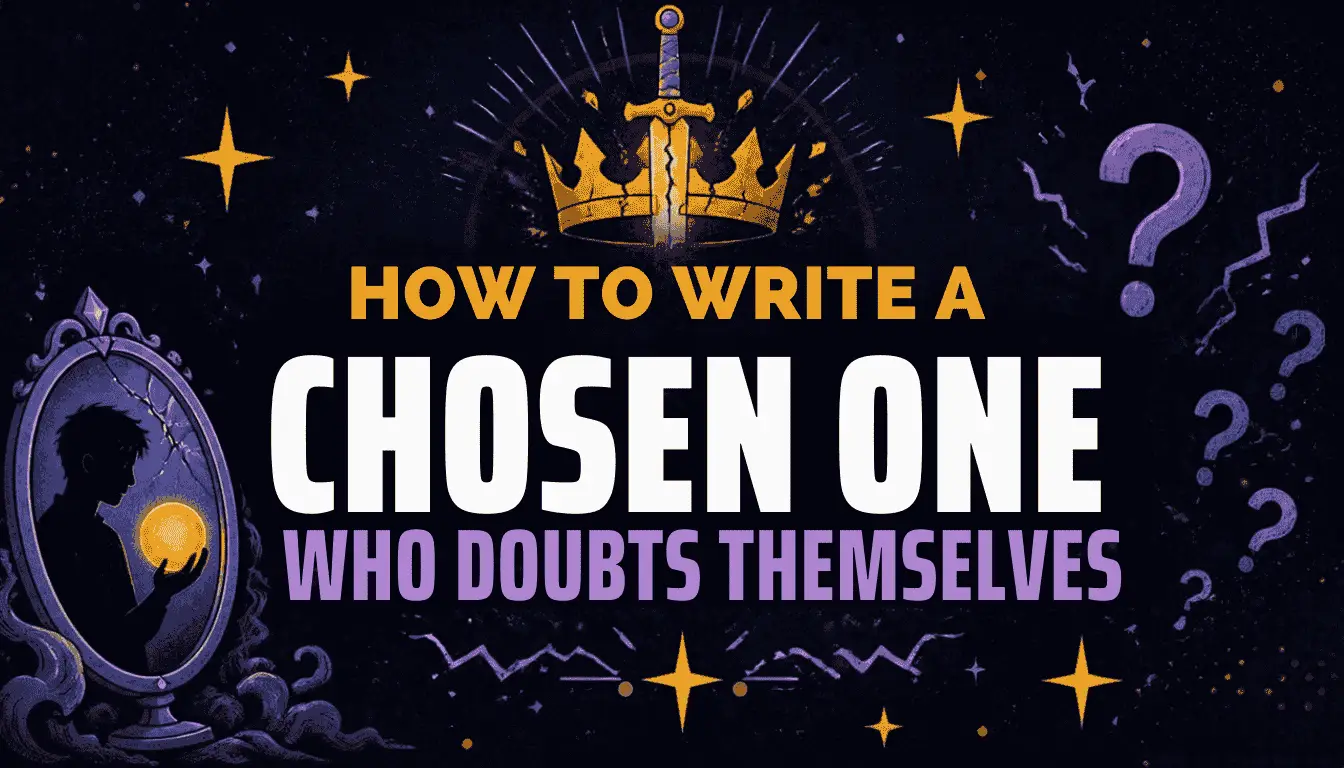
Every fantasy shelf has one: the farm kid, the orphan, the quiet apprentice with a prophecy hanging over their head. The trouble is that a hero who accepts destiny without a flinch is dull. Readers connect with the one who hesitates, stumbles, and wonders if the universe made a mistake.
Writing coaches who work with fantasy authors see the same pattern again and again. The writers whose chosen ones feel real are the ones who let those heroes be afraid. This guide walks through how to do that, step by step.
Why Readers Love a Chosen One Who Doubts Themselves
Confidence is not the same as strength. When a character is told they are the savior of the realm, the most human reaction is “Are you sure?” That reaction does three useful things for your story:
- It builds sympathy. Readers have all felt unready for something important.
- It raises the stakes. A hero who might fail is far more exciting than one who cannot.
- It creates room for growth. Doubt gives your character somewhere to travel emotionally.
An old saying holds that doubt is the first step towards wisdom. Your hero’s uncertainty is not a flaw to hide. It is where their character arc begins.
How to Write a Chosen One Who Doubts Themselves: Core Steps
1. Start with the Source of the Doubt
Self-doubt always has a root. Maybe the hero was told for years that they were ordinary. Maybe a past failure still haunts them. Maybe they simply see the gap between who they are and who the prophecy says they should be.
Pick one clear source and keep it consistent. A vague “I’m not good enough” feels thin, while “I couldn’t even save my brother, so how could I save a kingdom?” feels specific and painful.
2. Let Others Believe in Them First
Strong stories often pair a doubting hero with a believer, such as a mentor, a friend, or even an enemy who takes the prophecy seriously. This contrast makes the doubt visible without long inner monologues. The hero can argue with the believer, and the reader learns what is at stake through the dialogue.
3. Question the Calling Itself
A great way to deepen the conflict is to have your hero question where the mission came from. Early drafts often include a scene where the character demands to know who set you on to do it, meaning who decided this burden belonged to them. That question opens doors to political intrigue, hidden agendas, and a richer world.
4. Show Doubt Through Action, Not Just Thought
Telling readers “she was unsure” is weak. Instead, show it:
- She rereads the prophecy three times, hoping the wording changed.
- He volunteers for smaller, safer tasks to delay the big one.
- She apologizes before giving an order.
Small behaviors make doubt feel lived-in rather than announced.
Character Types to Keep in Mind
The Constant Doubter
A person who is a constant doubter questions everything, including good news. This type works well for slow-burn arcs, where each victory is followed by a new wave of worry. The danger is repetition, so give each doubt a fresh trigger and a different emotional flavor.
The Reluctant Believer
This hero doubts at first but gradually opens up. Their arc is about earning trust in themselves, one choice at a time.
The Secret Skeptic
This character acts brave in public and falls apart in private. Readers adore the contrast, because they get to see the real person behind the legend.
Whichever type you choose, remember that a person who doubts himself (or herself) is not weak. They are simply honest about the size of the challenge.
Practical Writing Exercises
Exercises help you find your hero’s voice before you commit to a draft. Here are a few that writing groups often use.
Interrogate your character. Sit down and write a question using who. For example: “Who told you that you were the chosen one, and why did you believe them?” Answer it in your hero’s voice, without censoring anything.
Dig into the mechanics. Next, write a question how, such as “How did you feel the moment you realized there was no one else?” Questions that start with “how” tend to pull out emotion and process rather than facts.
Try a short scene. Write a story called a moment of doubt, only 500 words long. Pick the instant right before your hero makes a major decision. Notice what they notice, what they avoid, and what they tell themselves.
Run the dialogue drill. Set a timer for ten minutes and run what some groups call the “answer ask questions doubts” drill. Have two characters trade lines, one voicing a fear, the other responding with a challenge. It quickly reveals how your hero’s mind works under pressure.
Common Mistakes to Avoid
- Doubt that never resolves. If the hero ends the book exactly as insecure as they began, the arc feels flat.
- Doubt that disappears overnight. One speech from a mentor should not erase years of fear.
- Whining instead of wrestling. The best self-doubting heroes still act. They just act while afraid.
- Ignoring consequences. Doubt should cost something, like a missed opportunity or a damaged friendship.
Bring Other Characters Into the Mix
A doubting hero shines brightest next to a strong opposing force. If you are building the other side of the conflict, it helps to read up on how to write a villain readers ship with the hero, since a magnetic antagonist can make your chosen one question themselves even more. You can also sharpen your hero’s inner drive with a character motivation worksheet for writers, which helps connect fear to desire.
For wider context, the Joseph Campbell Foundation offers background on the hero’s journey, and Writers Helping Writers has useful resources on character flaws and emotional arcs.
Final Thoughts
A chosen one who never doubts is a poster. A chosen one who doubts, and then steps forward anyway, is a person. Give your hero a clear source of fear, believable reactions, and room to grow, and readers will follow them anywhere.




Leave a Reply