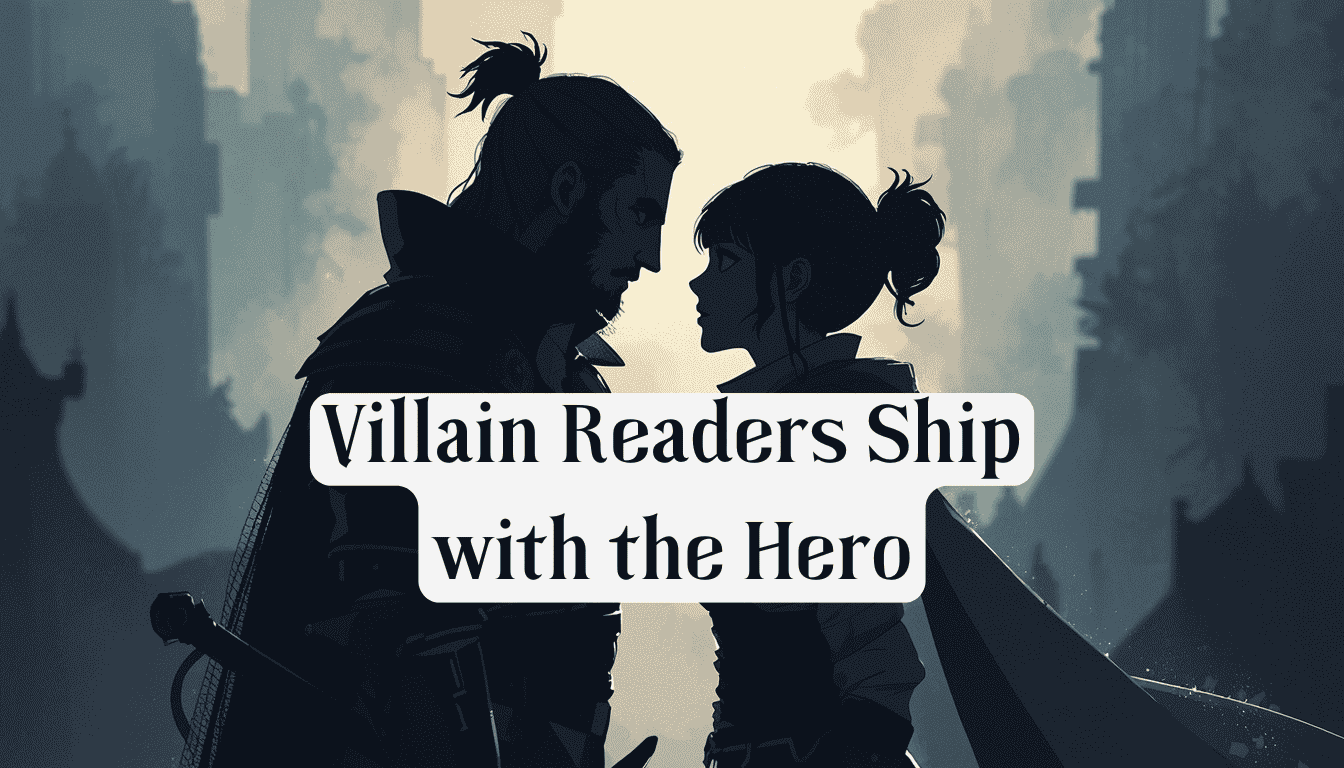
Every writer remembers the moment a “bad guy” stole a story right out from under the hero. It happens more often than people admit. A reader picks up a book expecting to root for the protagonist, and somewhere around chapter ten, they catch themselves hoping the villain and the hero end up together instead. That reaction is not an accident. It is the result of deliberate craft, and once a writer understands how it works, it can be repeated on purpose.
This guide breaks down exactly how to build that dynamic, drawing on patterns that show up again and again in bestselling novels, webtoons, and fan-favorite manhwa. It also draws on real trial and error from working with writers who wanted their antagonist to feel like a second lead rather than a plot obstacle. By the end, the goal is simple: readers should close the book still thinking about the villain.
What Characteristics Do Villains in Stories Have
Before anyone can figure out what characteristics do villains in stories have that make them shippable, it helps to understand what makes a villain work at all. A weak antagonist just blocks the hero’s path. A great one changes the hero’s entire journey.
The strongest villains usually share a few traits:
- A believable moral code. Even the darkest character needs internal logic. According to writing guidance from MasterClass, a villain should have a clear sense of morality, meaning their cruelty makes sense from their own point of view, even when it horrifies everyone else.
- A deep connection to the hero. The most memorable villains are tied to the hero personally, not just structurally. Shared history creates tension that pure opposition never can.
- Genuine strength. A villain who poses no real threat cannot be respected, and a character readers do not respect is rarely one they want to see kissed on the last page.
- A wound underneath the menace. Readers forgive a lot when they can see the pain that shaped a person.
These same traits are exactly what turn a stock antagonist into someone worth shipping. Fear is compelling. Fear paired with vulnerability is irresistible.
How to Write a Good Villain: The Foundation Before the Romance
A shippable villain still has to work as a villain first. Skipping this step is the single biggest mistake in the genre, and it is worth slowing down here before any romantic tension gets added.
How to Write a Villain Protagonist
Sometimes the villain is not a side character at all the villain is the main character. Learning how to write a villain protagonist means giving that character a goal readers can understand, even if they would never choose it themselves. Give them humor, a code they will not break, and something (or someone) they protect fiercely. That last detail alone can make a monster feel human.
How to Make a Good Villain Backstory
Readers do not need to agree with a villain’s choices, but they need to understand them. Figuring out how to make a good villain backstory usually starts with one question: what happened to this person before page one that convinced them cruelty was necessary? A villain shaped by real trauma reads very differently from one who is simply evil for its own sake. Writers working through this can look at this related guide on how to write a character who was abused, since many of the most sympathetic villains are built on unresolved pain rather than pure malice.
How to Make a Villain Scary
A villain who is only sad is not frightening, and a villain who is only frightening is not memorable. To learn how to make a villain scary, focus on unpredictability rather than gore. A villain who is calm while doing terrible things is often more disturbing than one who screams and rages. Precision, patience, and control tend to unsettle readers far more than volume.
The Words That Make Someone a Villain
It is worth remembering that dialogue does more work than description. The exact word choice used to make someone a villain matters, because readers form their opinion of a character within the first few lines of speech. A villain who threatens softly, who compliments before condemning, or who never raises their voice will often feel more dangerous than one who shouts. Language is the fastest way to signal exactly what kind of villain a reader is dealing with.
How to Write a Villain Readers Ship with the Hero
A shippable villain still has to work as a villain first. Skipping this step is the single biggest mistake in the genre, and it is worth slowing down here before any romantic tension gets added. For quick answers to common structural questions, check out our complete Villain Writing FAQs: Your Questions Answered guide.
The Hero Villain Romance Trope Readers Cannot Resist
The hero villain romance trope works because it takes two people who should be enemies and forces them into proximity, whether through captivity, a shared secret, or a mutual enemy worse than either of them. The tension comes from the fact that both characters know the relationship should not exist, and neither of them can stop it anyway.
How to Write Romantic Tension Between Hero and Villain
Learning how to write romantic tension between hero and villain is less about grand declarations and more about restraint. A villain who could destroy the hero but chooses not to says more than a hundred lines of dialogue. Small moments carry weight here: a hesitation before an attack, a secret kept out of loyalty neither character can explain, a look held a beat too long. The tension lives in what characters refuse to say out loud.
Dark Romance Character Dynamic Essentials
A convincing dark romance character dynamic usually rests on an imbalance that both characters are aware of, whether it is power, morality, or simple survival. What keeps this dynamic from feeling toxic on the page is consent and agency: even in a dangerous relationship, the hero needs choices, and the villain needs moments of real restraint. Readers can tell the difference between danger that respects a character and danger that erases them.
Hero x Villain Ship Writing Tips
For writers looking for practical hero x villain ship writing tips, three things consistently work: give both characters a reason to protect the other before either admits attraction, let the villain be the one who is more emotionally honest, and never let the hero fully “win” the villain over a little resistance should always remain. That lingering tension is often what keeps readers rereading a series years later.
Readers who enjoy this dynamic tend to also gravitate toward stories where the hero is not entirely certain of their own path. A character exploring that uncertainty pairs well with a villain who is fully sure of theirs, and writers building that contrast may find this piece on how to write a chosen one who doubts themselves useful for balancing the hero’s side of the equation.
Hero Villain Story Examples and Novel Tropes
The hero villain story format has exploded in webnovels and manhwa over the past several years, largely thanks to the isekai and villainess genres. A few patterns show up constantly across popular titles:
- Stories where a modern reader wakes up inside the body of a novel’s antagonist, such as “villain, the heroine eavesdropped on my thoughts”, use dramatic irony brilliantly: the villain knows exactly how the plot is supposed to go, and the hero does not.
- In a villain hero based novel, the antagonist often has foreknowledge of the story, giving them an edge the hero lacks, which flips the usual power dynamic on its head.
- Titles like “villain hero’s wishes are doubled novel” lean into wish-fulfillment mechanics where the villain’s growing power forces the hero to see them as an equal rather than an obstacle.
- The trend of “the main character is the villain” manhwa flips the entire structure, making the reader empathize with the antagonist from page one instead of discovering sympathy later.
Anyone studying hero vs villain writing at a structural level will notice these stories succeed because they treat both roles as fully three-dimensional, not because one side is objectively good and the other objectively bad. If a writer wants to read one polished example of the format from start to finish, plenty of platforms host a how to be a villain book written specifically in this reader-insert style, and reading a few is one of the fastest ways to absorb the pacing.
How to Be a Villain in Someone’s Fairy Tale
A trope closely related to the reader-insert isekai format asks a simpler question: how to be a villain in someone’s fairy tale when the “someone” is the reader’s own self-insert character. This trope, sometimes searched as how to be a villain in someone’s fairy tail or how to be a villain in someone’s fairy tales, plays with the idea that every story already has its roles cast, and the protagonist has been dropped into the one role nobody wants.
Writers experimenting with this concept often turn to a create a villain generator tool during early brainstorming. These generators are not a substitute for real character work, but they are genuinely useful for producing quick prompts, alternate motivations, or backstory seeds when a first idea feels flat. Treat the output as a rough draft of a personality, then rewrite it in the character’s own voice.
Naming and Motivating Your Villain
Two practical steps get skipped constantly, and both matter more than most writers expect.
How to Name Your Fictional Characters
A name shapes a reader’s first impression before a single trait is revealed. Learning how to name your fictional characters properly means considering era, culture, and tone together rather than picking whatever sounds “cool.” MasterClass’s guide on naming characters recommends researching root meanings and matching a name’s rhythm to the character’s role in the story, which is exactly why a villain’s name often sounds sharper or colder than the hero’s, even in the same language.
Writers who enjoy pulling from personal experience for this kind of detail may also find value in this piece on how to write a character inspired by yourself, since some of the most convincing villain names and quirks come from a writer quietly borrowing from their own life.
Character Motivation Worksheet for Writers
Once a name and backstory exist, motivation ties everything together. A character motivation worksheet for writers usually asks a version of the same four questions: what does this character want, what do they need, what are they afraid of, and what lie do they believe about themselves? Eadeverell’s motivation worksheet breaks this down further into people, events, environments, and beliefs, which is a genuinely helpful structure for making sure a villain’s actions never feel random.
Running a villain through this worksheet before drafting a single scene tends to save hours of revision later, since inconsistent motivation is one of the fastest ways to lose reader trust.
Final Thoughts
Writing a villain readers ship with the hero is not about softening the villain until they are secretly nice. It is about building a character whose danger, wound, and code are so clear that a reader understands exactly why the hero cannot look away, and neither can they. Nail the traits, root the cruelty in a real backstory, and let restraint do the emotional work that shouting never could. That combination is what keeps readers rereading the same chapters at 2 a.m., hoping the villain wins this time.


Leave a Reply