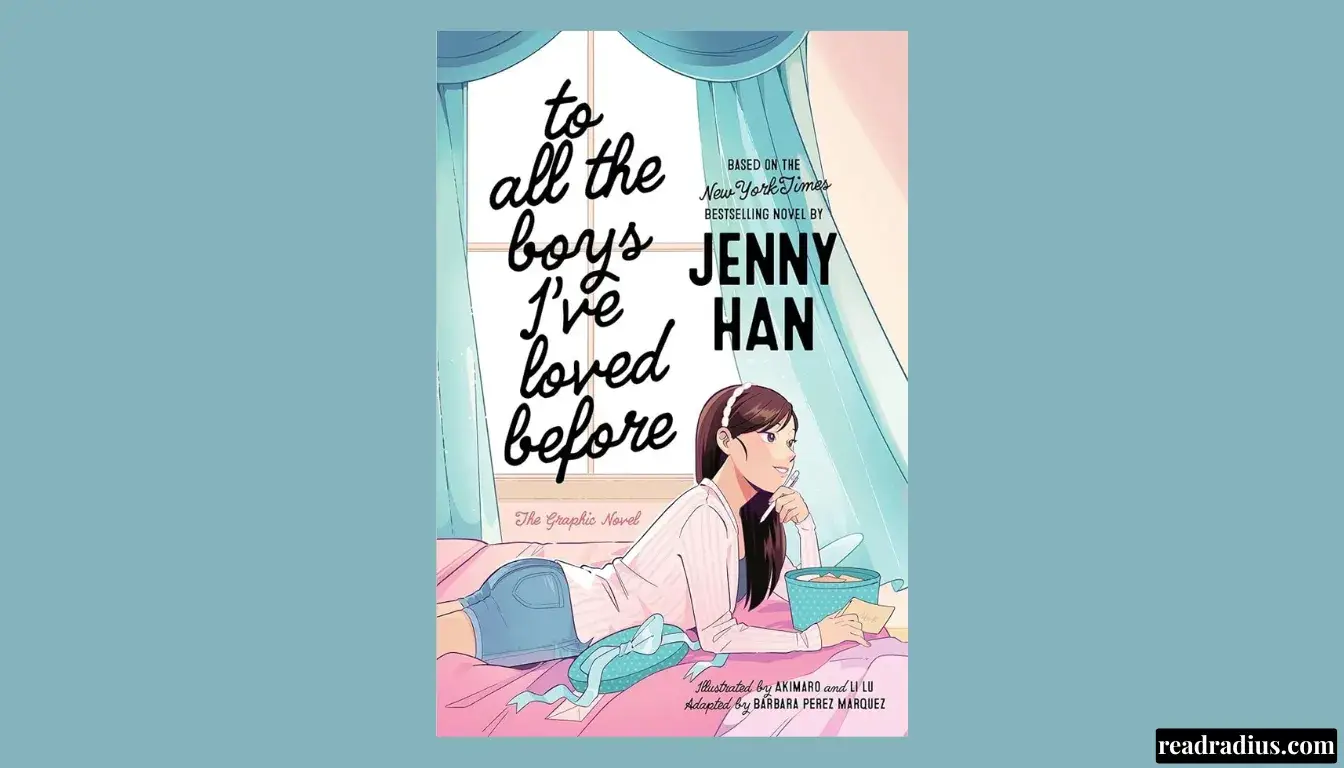
There’s a reason Jenny Han’s love letters (literally) keep landing on “best YA romance” lists year after year. This to all the boys i’ve loved before book review looks at what makes Lara Jean Song Covey’s story so re-readable, who it’s actually written for, and whether the hype holds up chapter by chapter.
Longtime fans of the trilogy and first-time readers picking it up after the Netflix films tend to ask the same handful of questions: How does the book differ from the movie? Is it appropriate for younger teens? And does that ending actually satisfy? This review answers all of it, drawing on multiple rereads of the series and years of watching how it holds up against other YA romance staples on shelves and in classrooms.
To All the Boys I’ve Loved Before Book Review
At its heart, this is a quiet, cozy story about a girl who writes secret love letters instead of ever mailing them until, somehow, they get sent. That single accident kicks off a fake-dating arrangement with Peter Kavinsky that slowly turns real, and it’s the emotional honesty of that slow-burn that sets the book apart from a lot of its competitors in the genre.
What stands out on a close read is how internal the book feels. Lara Jean’s narration is chatty, a little anxious, and endearingly specific about small things baking, stationery, her sisters — which gives the romance room to breathe instead of rushing the reader toward a kiss. Readers who came in through the film adaptation often notice the book is quieter and more introspective, with less plot compression and more time spent inside Lara Jean’s head. That difference is worth knowing going in, since it changes the pacing expectations considerably.
To All the Boys I’ve Loved Before Book Summary
For anyone who wants the shape of the story before committing: Lara Jean has written five letters to five boys she’s loved, each one meant to be a private way of closing a chapter, never to be read. When the letters are mysteriously mailed, chaos (of the gentle, YA kind) follows especially once Josh, her older sister’s ex, and Peter Kavinsky, the school’s most popular guy, both receive theirs.
To manage the fallout, Lara Jean and Peter agree to fake a relationship, mostly to convince Josh nothing is going on and to help Peter make his ex jealous. What starts as a contract with rules slowly stops feeling like acting. This is the engine of the book, and it’s handled with enough humor and vulnerability that it avoids feeling like a stock trope, even though the premise is a familiar one in the genre.
To All the Boys I’ve Loved Before Book Review Essay: A Closer Read
Looked at with an essay-style, analytical lens rather than a casual skim, the novel does more than set up a cute romance. It’s really a story about grief, sisterhood, and the fear of change dressed up as a rom-com. Lara Jean’s mother has passed away before the book begins, and that loss quietly shapes almost every decision she makes her caution, her nostalgia, her need to control small parts of her world like recipe cards and scrapbooks.
That layer is easy to miss on a first read but becomes obvious once the book is examined more critically. The letter-writing habit itself reads as a coping mechanism, a way to process feelings without risking real consequences, which makes the accidental mailing feel almost symbolic her past finally catching up with her present. Readers writing an academic or reflective piece on the book often find this the richest thread to explore, since it elevates the story above a simple high-school romance.
To All the Boys I’ve Loved Before Book Age Rating
Parents and younger readers frequently ask about suitability, so here’s a straightforward answer. The book is generally recommended for ages 12 and up, and it’s a common pick for middle grade crossover and early YA shelves. There’s no explicit content, and the romance stays largely at the level of first kisses, nervous hand-holding, and emotional vulnerability rather than anything more mature.
That said, the book does touch on grief, family loss, and some light gossip-driven social conflict at school, so it’s worth a quick skim for parents of more sensitive younger readers. Overall, it sits comfortably alongside other clean, coming-of-age YA romances and is one of the more age-appropriate entry points into the genre for tweens moving into teen fiction.
To All the Boys I’ve Loved Before Book Ending
Spoiler warning for anyone who hasn’t finished yet feel free to skip to the next section if that’s the case.
By the final chapters, the fake relationship between Lara Jean and Peter has stopped being fake in every way that matters. A misunderstanding involving Peter’s ex and an old video threatens to derail things, but the book closes on a hopeful, unresolved note rather than a fully tied bow. Lara Jean and Peter are together, but there’s clearly more story left to tell, which is very much the point.
That open-ended finish is one of the more debated aspects of the novel. Some readers find it a satisfying emotional landing point; others feel it functions more as a bridge to book two than a true conclusion. Either way, it’s a deliberate choice that sets up the rest of the trilogy rather than a loose end left by accident.
To All the Boys I’ve Loved Before Book Series
This is only the first installment of a three-book arc, followed by P.S. I Still Love You and Always and Forever, Lara Jean. The series follows Lara Jean through the ups and downs of her relationship with Peter, her final years of high school, and eventually the transition toward college and adulthood.
Read as a full series rather than a single novel, the emotional arc lands differently. Threads that feel small in book one Lara Jean’s anxiety about change, her relationship with her sisters, her hesitance to be vulnerable pay off across the trilogy in a way that rewards readers who stick with all three. For anyone who finishes the first book and enjoys it, the series is very much worth continuing as a complete story rather than a standalone read.
Final Verdict
This book earns its popularity. It’s warm without being saccharine, funny without undercutting its emotional moments, and structured in a way that respects teen readers instead of talking down to them. For readers who enjoy slow-burn romance with real emotional stakes underneath the cute premise, it’s an easy recommendation — and one that holds up well against other big names in contemporary YA romance.
Readers who enjoy character-driven YA stories with strong visual storytelling might also want to check out this guide on YA Graphic Novels: The Ultimate Guide to the Best Graphic Novel Books for Teens and Adults for a different but equally engaging format within the same age range.

Leave a Reply