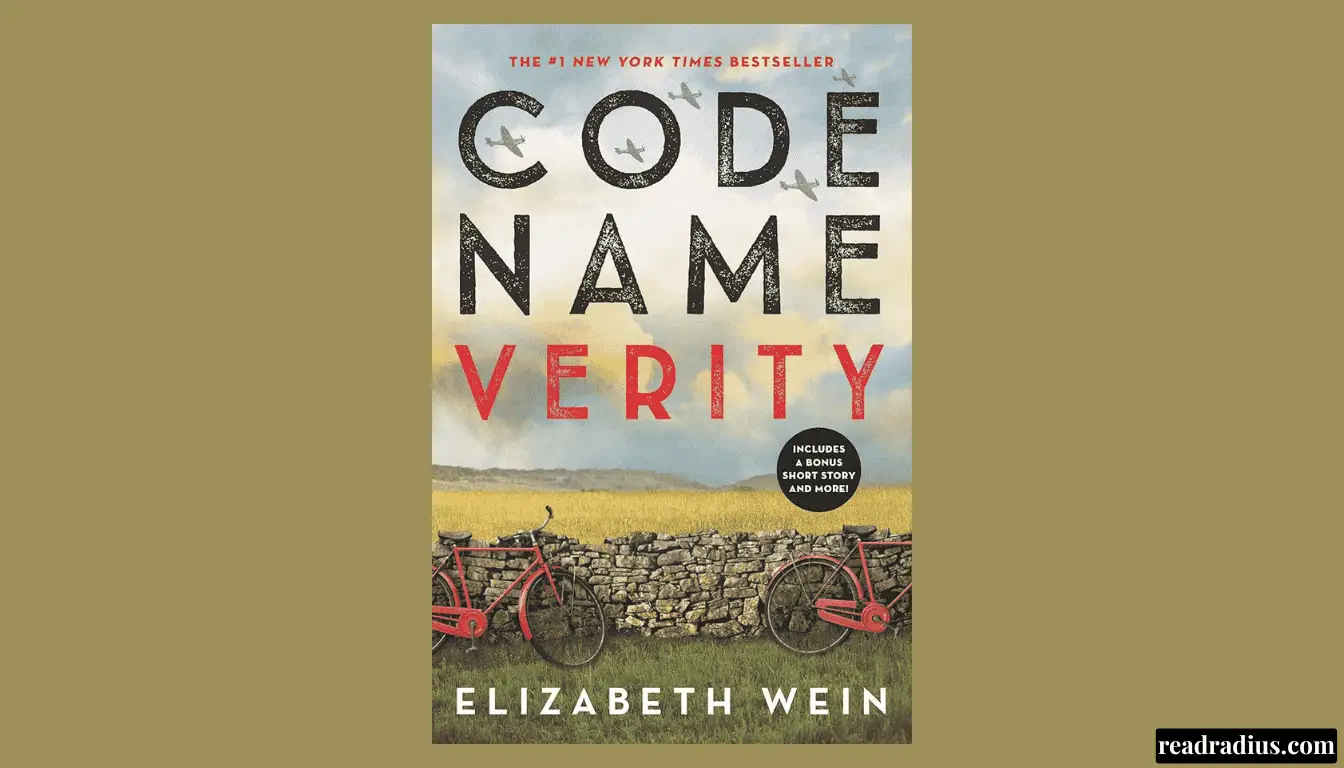
Some books arrive quietly and leave permanently. Code Name Verity by Elizabeth Wein is one of them. Published in 2012, this award-winning young adult historical fiction novel has earned a passionate readership that continues to grow and for good reason. It tells the story of two young women a spy and a pilot whose friendship is tested to its absolute limits during the Second World War.
Readers who love historical fiction with emotional weight, moral complexity, and unforgettable characters consistently place verity elizabeth wein at the top of their recommendation lists. Whether someone is approaching it for the first time or returning for another read, this novel never loses its power to move.
This review covers everything a reader needs to know from the code name verity by elizabeth wein summary to its age rating, audiobook experience, and the reasons this book continues to matter well beyond its original publication year.
Code Name Verity by Elizabeth Wein Summary
The novel opens in Nazi-occupied France in 1943. A young Scottish woman has been captured by the Gestapo. To survive at least for a little longer she agrees to write a confession. But what she writes is far more than a confession. It is a love letter, a war diary, and a masterfully layered account of her friendship with her best friend, Maddie, a pilot who flew her into France before their mission went catastrophically wrong.
The story is told in two parts, each narrated by a different character. The first half belongs to the prisoner, who calls herself “Verity” a code name that carries enormous weight by the novel’s end. The second half belongs to Maddie, and it reframes everything the reader thought they understood about the first half. Elizabeth Wein constructs this dual narrative with extraordinary precision, and the payoff is one of the most discussed twist endings in modern historical fiction.
At its core, the code name verity by elizabeth wein summary is the story of two women who love each other without condition, who serve their country in the middle of a war that was never meant for them, and who refuse right until the final pages to stop fighting for each other.
The Dual Narrative Structure
Wein’s decision to split the novel into two voices is one of its greatest structural strengths. The first narrator writes under duress, her account unreliable by design. The second narrator, Maddie, writes with the clarity and heartbreak of someone who already knows how the story ends. Together, they create a reading experience that demands and rewards close attention.
Many readers report needing to go back and reread the first half after finishing the second. That is not a flaw in the writing. It is a feature. The novel is built to be discovered twice.
Code Name Verity by Elizabeth Wein Age Rating What Parents Should Know
The code name verity by elizabeth wein age rating is typically listed as suitable for readers aged 14 and above. The novel is shelved as young adult fiction, but it reads with the emotional sophistication of adult literary fiction.
Parents and educators should be aware of the following:
War violence and torture: The novel depicts the reality of Nazi interrogation and wartime violence. While Wein does not dwell gratuitously on graphic detail, the threat and reality of torture is present throughout the first half of the book. It is handled with restraint but should not be minimized.
Emotional intensity: This book is widely known for causing readers to cry sometimes unexpectedly and at considerable length. The emotional climax is devastating. Younger or more sensitive readers may find it genuinely upsetting.
No sexual content: The relationship between the two main characters is a profound, platonic friendship. There is no romantic or sexual content in the novel.
Language: The language is period-appropriate and restrained. There is no strong profanity.
For classroom use, most English teachers who assign this novel do so in Years 9 through 12, or the equivalent grades in other countries. It works extremely well as a taught text because of its structural complexity, its historical context, and the ethical questions it raises about loyalty, sacrifice, and identity.
Code Name Verity by Elizabeth Wein Audiobook Is It Worth Listening To?
The code name verity by elizabeth wein audiobook is genuinely exceptional, and many listeners argue it surpasses the reading experience rather than merely replicating it.
The audiobook is narrated by Lucy Gaskell and Morven Christie, who take on the voices of the two main narrators respectively. Their performances bring an authenticity to the Scottish and English accents that grounds the story in its historical setting. The vocal distinction between the two narrators also makes the novel’s structural shift when the story moves from the first to the second narrator feel natural rather than jarring.
Why the Audiobook Format Works Particularly Well
This novel relies heavily on voice. Both narrators have deeply distinctive personalities, speaking styles, and emotional registers. Hearing those voices performed by skilled actors adds a layer of characterization that even the most attentive silent reader might miss.
Additionally, because the plot depends on re-evaluation the reader constantly being asked to reconsider what they have already heard the audiobook’s linear, immersive format encourages the kind of deep focus the novel rewards most. Listeners frequently report that the ending hit them harder in audio form.
The audiobook is available through major platforms including Audible, and runs approximately nine hours in total a satisfying length for a long commute, a road trip, or a dedicated weekend listen.
Code Name Verity by Elizabeth Wein Full Review
The Writing
Elizabeth Wein’s prose is meticulous without being cold. She writes in a way that feels lived-in the kind of writing that comes from someone who has clearly done her research but has also taken the time to understand what it felt like to be alive in that moment in history. Wein is herself a pilot, and that background shows in the quiet authority with which she writes about Maddie’s relationship with aircraft. Those sections carry a technical authenticity that most authors could not fake.
The novel also plays with dramatic irony in sophisticated ways. The reader often knows more than the characters or thinks they do and Wein uses this to build tension that does not depend on action sequences but on emotional suspense. Will Maddie find her? Does Verity know what is coming? Can their friendship survive what the war has done to both of them?
The Characters
Whose real name the reader discovers gradually is one of the most compelling first-person narrators in recent historical fiction. She is funny, self-aware, terrified, and brilliantly intelligent. She uses her own voice as both a weapon and a shield, and the reader falls for her almost immediately.
Maddie is quieter but no less memorable. She is practical, brave, and defined by her love of flying and her love of her friend. Her half of the novel carries the weight of grief and resolve, and Christie’s narration in the audiobook captures this beautifully.
The supporting characters including the German officers and the French resistance figures are rendered with enough complexity to avoid stereotype, which is not always the case in wartime fiction. Wein resists the temptation to flatten the enemy entirely, though she does not excuse them either.
The Emotional Impact
Readers and reviewers consistently describe finishing this book as an experience. Not merely reading it experiencing it. The ending is discussed in hushed tones by people who have already read it, and approached with nervous anticipation by those who have not.
What makes it work is not the plot twist itself but the emotional logic behind it. By the time the novel reaches its climax, the reader knows both characters well enough to understand exactly what the moment costs and exactly what it means. That is the product of two hundred pages of careful, patient character work. Wein earns her ending completely.
Why This Book Still Deserves a Place on Your Shelf in 2026
Literary experts and devoted readers who specialize in historical fiction often describe the experience of first reading verity elizabeth wein as a dividing line. Before reading it, and after. The novel changes the reader’s understanding of what historical fiction can do how it can use structure and voice not just to tell a story but to enact the themes of the story itself.
The friendship at the center of this book is not described as extraordinary. It simply is extraordinary. Wein trusts the reader to feel that without being told. In a publishing landscape that often over-explains emotional beats, this restraint is itself a form of respect.
For readers who enjoy historical fiction with moral and structural depth, this novel is not just recommended it is essential. It belongs in the same conversation as The Book Thief by Markus Zusak and All the Light We Cannot See by Anthony Doerr, and it holds its own in that company comfortably.
If you enjoy this kind of deeply researched, character-driven wartime story, explore our companion guide: Historical Fiction Books: A Reader’s Ultimate Guide a curated collection of the best historical fiction across every era and region.




Leave a Reply