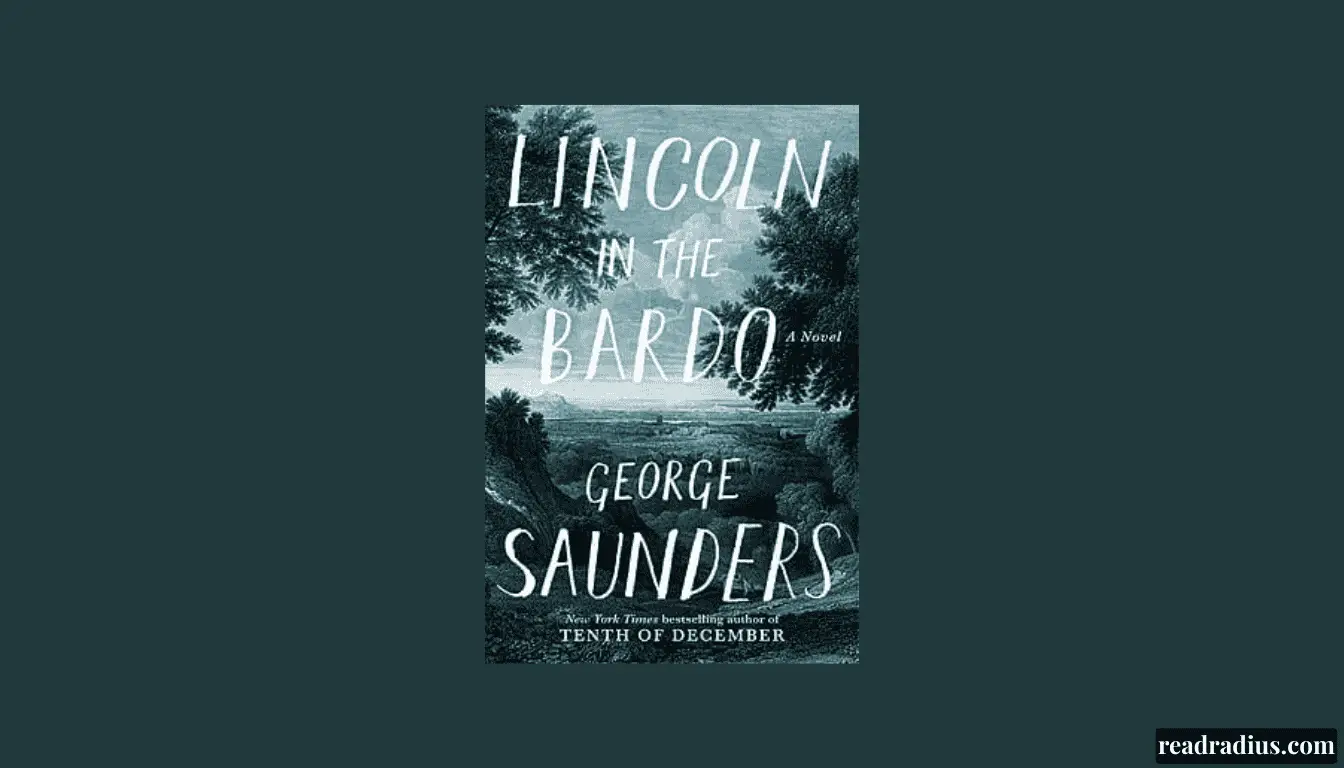
There are books that entertain, and then there are books that quietly rearrange something inside you. Lincoln in the Bardo by George Saunders belongs firmly in the second category. Published in 2017, this debut novel from a writer already celebrated for his short fiction won the Man Booker Prize and left readers around the world a little stunned in the best possible way. Anyone who has spent time with this book knows it does not read like anything else out there. It rewards patience, curiosity, and a willingness to sit with grief.
This review digs into the novel’s structure, themes, emotional core, and what makes it so persistently memorable. Whether someone is picking it up for the first time or returning to it years later, there is always something new to find.
What Is the Lincoln in the Bardo Novel by George Saunders About?
The story centers on a real historical event: the death of Willie Lincoln, eleven-year-old son of President Abraham Lincoln, in February 1862. Willie died of typhoid fever while the Civil War raged, and grief-stricken reports of the time suggest Lincoln visited the Georgetown crypt where his son was laid to rest perhaps more than once.
Saunders takes that historical seed and builds something extraordinary around it. The “bardo” of the title comes from Tibetan Buddhist tradition. It refers to an intermediate state between death and rebirth a liminal space where the recently deceased linger, often unaware or unwilling to accept that they have died.
In the novel, Willie Lincoln arrives in this bardo. He is surrounded by a chorus of ghosts dozens of them each trapped there for their own complicated reasons. Two of the most prominent are Hans Vollman, a printer who died on his wedding night before consummating his marriage, and Roger Bevins III, a young man who took his own life after being rejected by the man he loved. These characters, and many others, bear witness to a father’s love and become unexpectedly moved even transformed by it.
A Summary of Lincoln in the Bardo: The Story in Its Layers
A clean summary of Lincoln in the Bardo can feel reductive, because the novel operates on several layers at once. But here is the essential shape of it.
The narrative alternates between two modes. The first consists of excerpts from real and invented historical sources diaries, newspaper accounts, letters, memoirs that describe the political climate of 1862, the White House party the Lincolns hosted the night Willie fell ill, and the public mood during the war. These fragments create a kind of mosaic portrait of Lincoln himself, showing how different observers perceived him and how profoundly Willie’s death broke him.
The second mode takes place entirely in the bardo. The ghosts some comic, some heartbreaking, some grotesque narrate in a polyphonic chorus. They observe Lincoln’s visits to the crypt, debate what to do, and grapple with their own unfinished business on earth. As the novel progresses, Willie’s situation becomes urgent: children who linger too long in the bardo do not pass peacefully into what comes next. They are consumed by it.
The emotional climax Lincoln holding his son’s body in the crypt while the ghosts of strangers enter Lincoln’s own body to share their memories and grief with him is one of the most moving passages in recent American literature. It transforms a personal tragedy into something collective, even cosmic.
George Saunders Lincoln in the Bardo Review: What Works So Well
The Polyphonic Voice
Reading through Lincoln in the Bardo explained by scholars and enthusiasts alike, one theme comes up again and again: the form. Saunders gives voice to dozens of narrators simultaneously, and yet the novel never feels chaotic. Each voice is distinct funny, sad, deluded, wise and together they build a texture that feels genuinely unlike anything else.
This choice reflects something true about grief and history. No single account captures the full picture. Memory is partial. Witness is fragmentary. By assembling so many voices, Saunders creates a portrait of Lincoln’s grief that feels more complete than any single narrator could achieve.
The Blend of History and Invention
The use of real historical sources alongside invented ones is both a formal experiment and a quiet philosophical statement. Readers often cannot tell which passages are real and which Saunders fabricated. The historical sources contradict each other two eyewitnesses describe Lincoln’s appearance that night in completely different terms. This is not a flaw. It is the point. History is always contested, always filtered through individual perception.
For those who want to trace exactly which sources are real, the novel’s acknowledgments offer a starting point but part of the experience is sitting with the uncertainty.
The Humor Alongside the Grief
What makes the lincoln at the bardo summary resonate so deeply is that Saunders never lets the novel become purely solemn. Hans Vollman and Roger Bevins III are genuinely funny characters, and their comic dimensions make their eventual moments of grace land far harder. Saunders has always understood that comedy and tragedy are not opposites. They live inside each other.
Lincoln in the Bardo Goodreads: What Readers Are Saying
On Lincoln in the Bardo by George Saunders Goodreads pages, the ratings are telling. The novel holds a strong average, with hundreds of thousands of ratings and an enormous volume of detailed, passionate reviews. Readers frequently describe it as unlike anything they have read before sometimes in ways that felt initially disorienting, and then deeply rewarding.
Many Goodreads reviewers note that the first fifty pages require a certain trust. The format is disorienting by design. But almost universally, readers who pushed through found that the novel opened up into something unexpectedly powerful. The most commonly cited moments of impact involve Lincoln himself a historical figure rendered not as monument but as a devastated father and the final convergence of the ghosts’ stories with Willie’s fate.
Critical voices on Goodreads tend to focus on the difficulty of entry: the fragmented structure, the unusual narrators, the sheer density of voices. These are fair observations. This is not a novel that offers easy comfort. It is one that earns its emotional payoff through accumulated strangeness.
Lincoln in the Bardo Explained: The Themes Beneath the Story
Grief and Letting Go
At its core, lincoln by the bardo or rather, the novel set in that space is a meditation on grief. Willie cannot move on while his father’s grief tethers him to the world. Lincoln himself must eventually accept that holding on too tightly to what is gone is its own kind of damage. This is a truth that resonates far beyond the historical setting.
The Humanity of the Overlooked
The ghosts Saunders populates the bardo with are not famous. They are ordinary a printer, a young man who loved unwisely, a woman with regrets about her ambitions, a preacher unable to relinquish his faith or his doubts. By centering these figures alongside Lincoln, Saunders insists that their inner lives matter as much as the president’s. It is a democratic impulse running through every page.
History as Living Thing
George saunders lincoln en el bardo as Spanish-speaking readers have encountered the novel in translation carries the same essential argument across languages: history is not fixed. It is made of competing voices, partial truths, and the feelings of individuals whose names no one recorded. The novel is partly an argument for the importance of imaginative empathy in understanding the past.
What the Lincoln in the Bardo Novel by George Saunders Offers Readers of Historical Fiction
For anyone already interested in historical fiction, this novel represents one of the genre’s most adventurous recent achievements. It does not simply recreate a historical moment it interrogates how we understand historical moments at all. Saunders uses the scaffolding of a real event to ask real questions about consciousness, mortality, love, and the relationship between the living and the dead.
Readers who enjoy work that blends the literary and the experimental who appreciate novels that take formal risks in service of emotional truth — will find Lincoln in the Bardo deeply rewarding. It pairs well with other books that play with voice and historical fact, and it sits comfortably at the intersection of grief narrative, historical fiction, and American political literature.
For a broader guide to the genre, readers can explore Historical Fiction Books: A Reader’s Ultimate Guide for curated recommendations across time periods and styles.
A Note on Personal Experience With This Book
Spending time with this novel is genuinely different from most reading experiences. The first thirty pages can feel like standing outside a party the noise is there, the energy is there, but the entry point is not immediately obvious. Then, somewhere around the point when the ghosts begin to crowd around Lincoln in the crypt, something shifts. The strangeness starts to feel like the only honest way to tell this particular story.
What stays long after finishing is not plot detail but feeling: the image of a father holding a child he cannot keep, surrounded by strangers he cannot see, each of them carrying their own impossible weight. Saunders makes that image do an enormous amount of work. It earns every page that led to it.
George Saunders on the New Yorker Essays and short fiction that illuminate the writer’s voice and preoccupations before this novel.
Final Thoughts
Lincoln in the Bardo by George Saunders is a novel that justifies its own ambition. It takes an unusual form and uses it not as a gimmick but as a genuine argument — about how grief works, how history is constructed, and how ordinary lives deserve the same attention as famous ones. The lincoln in the bardo by george saunders summary can only gesture at what the full experience of reading it delivers.
For anyone willing to meet the book on its own unusual terms, it offers something rare: a story that feels important not just as literature, but as a way of understanding what it means to love something you cannot hold onto forever.



Leave a Reply