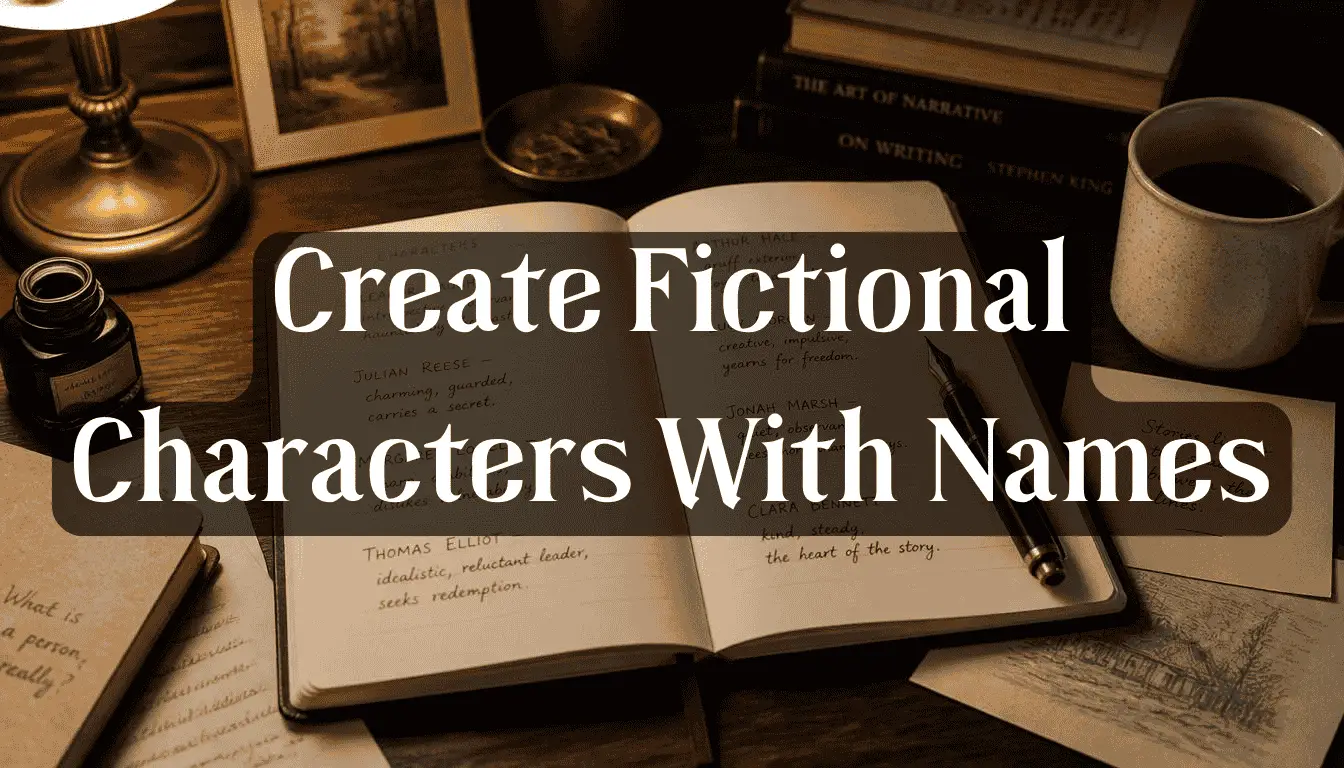
Naming a fictional character is one of those deceptively simple tasks that writers agonize over for days. The right name does not just label a person it carries weight, personality, and even foreshadows who that character will become. Writers who understand how names shape character perception tend to write people that readers remember long after the last page.
This guide walks through everything a writer needs to know to create fictional characters with names that feel authentic, purposeful, and earned.
How to Create Fictional Characters With Names That Feel Real
Before a writer even picks up a name generator or flips through a baby name book, they need to understand what the character is. Naming comes second. Character comes first.
Start With Who They Are Before What They Are Called
Ask the foundational questions: What does your fictional character look like? How do they move through the world? Are they someone who commands a room or shrinks from it? A name like “Dorian” carries a different psychological weight than “Dennis,” even if both men wear the same coat.
Writers who approach naming this way tend to land on names that feel inevitable like the character could not possibly be called anything else. That instinct does not happen by accident. It comes from knowing the person deeply before assigning them a label.
Think about your favourite fictional character and why their name works so well. Atticus Finch. Hermione Granger. Katniss Everdeen. None of those names are random. Each one carries sound, culture, and meaning that reflects who the character is at their core.
Consider the World the Character Lives In
Fantasy character name generator tips are everywhere online, but the smartest writers use those tools as a starting point, not an endpoint. A name generated by an algorithm still needs to feel true to the world being built.
If the story takes place in a grimy industrial city, characters probably do not have flowing, melodic elvish names. If the world is ancient and mythological, a name like “Brad” will snap readers right out of the story. The setting shapes the naming logic just as much as the character’s personality does.
What Is Your Character Called and Why Does It Matter?
The question “what is your character called?” sounds simple, but it carries a lot of responsibility. A name is the first thing a reader absorbs about a character. Before they see their face or hear them speak, they have already started forming an impression based on how the name sounds.
This is why character naming tips for writers almost always mention phonetics. Hard consonants like K, X, and G tend to feel sharp, aggressive, or powerful. Softer sounds L, M, N tend to feel gentle, elegant, or approachable. A villain named “Knox” already feels more threatening than one named “Elliot,” and writers can use that to their advantage or deliberately subvert it.
How Names Shape Character Perception Across Genres
Names in literary fiction tend to be understated and realistic. Names in epic fantasy tend to be ornate and layered with meaning. Names in YA fiction walk a careful line they need to feel distinctive without being unpronounceable to a teenager reading at midnight.
Knowing how to pick names for YA characters specifically means understanding that young readers connect fast and hard. A name that is too unusual creates distance. A name that is too ordinary fades into the background. The sweet spot is a name that feels fresh but readable something like “Cleo” or “Tobias” rather than “Xyxelith” or “John.”
The Psychology Behind Fictional Character Names
Who is the fictional character that you identify most with, and why? Most readers, when asked that question, describe someone whose name fits like a second skin. The character’s name has become inseparable from who they are.
That is not coincidence. Writers build that bond by choosing names that resonate emotionally. A name can hint at a character’s arc, signal their cultural background, reflect their parents’ hopes or fears, or carry irony when the character turns out to be the opposite of what their name suggests.
Consider how literary history is full of characters whose names do exactly this. A character named “Grace” who is fundamentally graceless creates immediate dramatic tension. A villain named “Angel” unsettles readers in ways that feel deliberate. These choices do not happen by accident.
How to Pick Names That Work Across Your Entire Cast
One of the most overlooked character naming tips for writers is to think about the whole cast together, not just individual characters in isolation.
If every character in a novel has a name starting with the letter “C” Cassie, Cole, Celia, Connor readers will constantly confuse them. Names within a cast need to be varied in sound, length, and rhythm. A protagonist named “Sam” stands out more when surrounded by characters named “Theodora,” “Reuben,” and “Luz” than when surrounded by “Tom,” “Dan,” and “Jack.”
Writers who think about this collectively produce casts that are easier to track, easier to love, and more memorable overall.
How to Write a Character With Chronic Illness because a character’s name often sets the emotional tone before readers even learn what challenges that character faces.antasy Character Name Generator Tips Used the Right Way
Fantasy writers face a unique challenge. They build worlds from scratch, which means the naming logic also has to be built from scratch. Fantasy character name generator tips often suggest pulling from real-world etymology ancient Latin, Old Norse, Sanskrit, Swahili and layering those sounds together.
The best fantasy names feel like they could have evolved naturally within the world’s own linguistic history. If one culture in a story uses hard, guttural sounds and another uses flowing vowels, readers begin to hear the difference between those peoples without needing it explained. Names become world-building.
A few practical steps that help:
- Create a naming convention for each culture or region in the story world.
- Read names aloud to test how they feel in dialogue.
- Check that names do not accidentally mean something unfortunate in other real-world languages this is a mistake that has embarrassed more than one published author.
- Avoid apostrophes in fantasy names unless there is a strong linguistic reason. “T’aar” rarely adds more than it takes away.
A Note on Naming Characters in Romance and Genre Fiction
Some writers wonder how to marry a fictional character into a story’s emotional landscape meaning, how do they make a character’s name feel romantic, threatening, comedic, or tragic depending on the genre they are writing in?
The answer lies in association. Names carry cultural baggage. “Romeo” is romantic because Shakespeare made it so. “Dexter” now carries sinister undertones for anyone who watched the television series. Writers can lean into those associations or work against them both are valid creative choices as long as they are made deliberately.
In romance fiction specifically, names tend to be chosen for their warmth and approachability. In thrillers, names are often blunter and more utilitarian. Genre conventions exist because they work but breaking them thoughtfully is often what makes a story stand out.
How to Write a Character Who Is Funny humor often lives in contrast, and a character’s name can be one of the funniest (or most ironic) tools in the writer’s kit
Using Real Research to Find the Right Name
Writers who treat naming research seriously tend to produce better characters. Some useful approaches include:
- Consulting census data from the decade and country in which a character was born. A character born in 1978 in rural England would have very different name options than one born in 2005 in São Paulo.
- Reading obituaries and historical records for a feel of authentic names from specific eras and regions.
- Exploring names from cultures outside the writer’s own with genuine research and respect, not surface-level exoticism.
- Keeping a running name list in a writing notebook, pulling from everything from coffee shop receipts to movie credits.
The goal is always authenticity. Readers may not know why a name feels right, but they notice immediately when it feels wrong.
Common Naming Mistakes Writers Make
Even experienced writers fall into predictable traps when naming characters. The most common ones include:
Giving minor characters forgettable names while overthinking protagonists. Every named character in a story deserves a name that fits, even if they only appear on two pages. A name like “the doorman” is fine. A named doorman called “Steve” who feels like every other Steve in fiction is a missed opportunity.
Choosing names based on personal attachment rather than character fit. A writer might love the name “Isabelle” because of someone they once knew. That emotional connection does not automatically make it the right name for a cynical forty-year-old detective in a noir novel.
Ignoring how a name sounds when spoken aloud. Fiction gets read in audiobook format, in book clubs, and in a reader’s internal voice. A name that looks elegant on a page but is impossible to pronounce creates friction every time it appears.
External Resources Worth Bookmarking
Writers who want to go deeper on this topic will find these resources genuinely useful:
- Behind the Name a detailed database of name etymologies, origins, and cultural history. Invaluable for historical fiction and world-building.
- FAQs About Naming Fictional Characters Our comprehensive Q&A addressing common edge cases, legal considerations, and quick-fix naming solutions for fiction writers.
- Fantasy Name Generators one of the most comprehensive tools available for genre fiction, with generators for hundreds of cultural and fantastical naming conventions.
- Nameberry originally a baby naming resource, but writers use it extensively for contemporary and literary fiction because of its cultural breakdowns and trend data.
Final Thoughts on Getting the Name Right
Every character a writer creates deserves a name that was chosen, not just assigned. The best names feel like they grew alongside the character rather than being applied after the fact.
Writers who take naming seriously who think about sound, meaning, cultural context, and how names shape character perception from the very first page produce fiction that readers sink into more deeply. The name is not decoration. It is the first layer of character.
So the next time someone sits down to figure out what their character is called, they should take that question seriously. The answer matters more than it might seem.




Leave a Reply