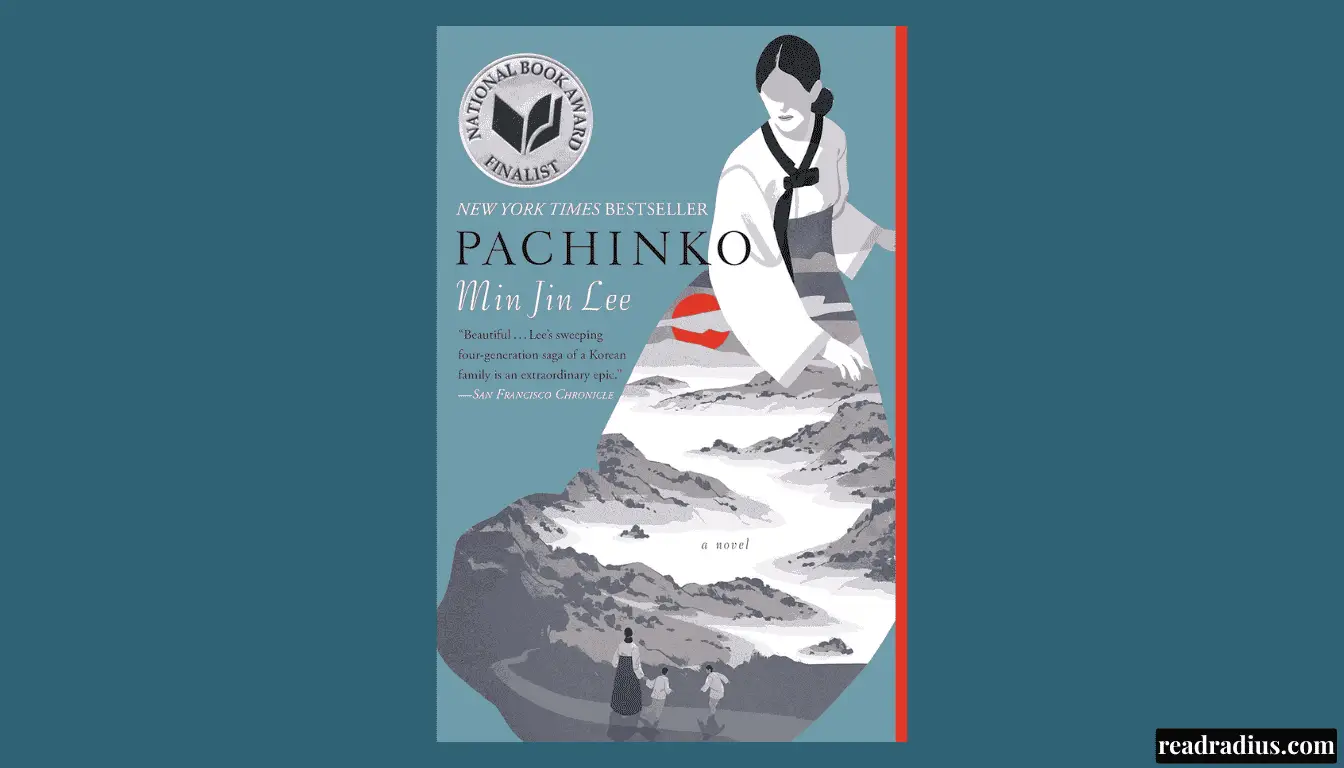
There are books people finish and set aside, and then there are books that quietly rearrange something inside them. Pachinko, the sweeping multigenerational novel by Min Jin Lee, falls firmly into the second category. Since its publication in 2017, it has earned passionate praise from readers on Goodreads, sparked lively threads across Reddit, and drawn serious attention from outlets like The New Yorker, The Guardian, and The New York Times. The attention is completely deserved.
This review takes an honest, thorough look at the Pachinko novel what it does brilliantly, where it challenges readers, and why it continues to hold such a firm place in contemporary literary fiction.
What the Pachinko Novel Is About
The Pachinko book summary begins in 1910s Korea under Japanese colonial rule. A young woman named Sunja becomes pregnant by a wealthy, married man and faces social ruin. A kind minister named Isak offers to marry her and take her to Japan, and that single act of grace sets off a family story that spans four generations and nearly a century.
The novel follows Sunja’s descendants as they navigate life as Koreans living in Japan a group known as Zainichi Koreans who face systemic discrimination, poverty, and the constant question of belonging. The title itself is a reference to the pachinko parlor industry, one of the few economic avenues historically open to Zainichi Koreans in Japan, and it carries tremendous thematic weight throughout the book.
Min Jin Lee spent nearly three decades researching and writing this story. That dedication shows on every page.
What Critics and Readers Have Said
The New Yorker and NYT Perspective
The Pachinko book review coverage in major publications like The New York Times and The New Yorker focused on Lee’s ability to make historical suffering feel intimate and immediate. Critics praised her refusal to sentimentalize her characters’ pain while also never allowing them to become symbols rather than people. The NYT named it a Notable Book, and The New Yorker highlighted how Lee captures the mundane texture of discrimination not just dramatic moments of injustice but the daily, grinding weight of being treated as foreign in the only country you have ever known.
The Guardian’s Take
The Pachinko book review in The Guardian emphasized the scope of Lee’s ambition. Writing four generations of a Korean family across nearly a hundred years of real history is an enormous structural challenge. The Guardian noted that Lee handles it with remarkable control, keeping each character emotionally distinct even as decades pass and the cast expands. Reviewers there also pointed to the novel’s relevance to contemporary conversations about immigration, identity, and belonging.
What Reddit Readers Are Saying
The Pachinko book review discussion on Reddit particularly in r/books and r/booksuggestions reveals how deeply personal readers find this story. Many readers describe finishing it and immediately wanting to press it into someone else’s hands. Threads frequently mention being blindsided by how emotionally connected they became to characters across multiple generations. Some readers note that the novel’s pacing is slow in places, which is worth knowing going in, but the overwhelming consensus is that the emotional payoff is enormous.
Goodreads Community Response
Pachinko review discussion on Goodreads gives it extremely high marks, with tens of thousands of ratings and a score that consistently sits above 4.3 out of 5. Readers on Goodreads highlight the character of Sunja as one of the most compelling protagonists in recent fiction resilient without being unrealistic, warm without being soft. The community also frequently recommends it alongside other multigenerational historical fiction for readers looking for their next deeply satisfying read.
The Themes That Make This Novel Unforgettable
Identity and Belonging
At its core, the Pachinko novel is about what it costs to belong nowhere. Sunja’s children are born in Japan, speak Japanese, and have never seen Korea yet Japanese society does not accept them as Japanese. This liminal identity, shared by real Zainichi Koreans for generations, sits at the heart of every character’s journey. Lee explores this without polemics, letting the lived experience speak for itself.
Family, Sacrifice, and Inheritance
Every generation in Pachinko inherits something from the one before not always what they wanted, not always what they needed, but always something that shapes who they become. The way Lee maps how sacrifice ripples forward across decades feels genuinely true to how families actually work. Sunja sacrifices for her sons. Her sons sacrifice for their own children. And those children must decide what to do with the inheritance of struggle they never asked for.
Shame, Resilience, and Survival
The opening line of Pachinko “History has failed us, but no matter” announces the novel’s emotional register immediately. These characters do not get to fight history. They survive it. Lee treats survival not as triumph or defeat but simply as the ongoing, complicated work of living. That complexity is what gives the Pachinko novel its unusual emotional depth.
Min Jin Lee: The Author Behind the Story
Min Jin Lee is a Korean American writer who was born in Seoul and raised in New York. Before Pachinko, she published Free Food for Millionaires (2007), which also explored Korean immigrant identity. Her legal training gives her writing a precision and a structural rigor that is easy to admire.
What makes Lee’s approach to the Pachinko novel so effective is her refusal to make any single character purely good or purely bad. The discriminatory systems she depicts are real and damaging, but the individuals within them including Japanese characters are rendered with full human complexity. This is a rare and demanding kind of empathy, and Lee manages it consistently across nearly five hundred pages.
Strengths and a Few Honest Observations
The strengths of Pachinko are considerable. The prose is clean and propulsive without being showy. The historical research feels lived-in rather than displayed. The characters, especially the women, are written with exceptional care. And the emotional architecture of the novel the way it builds feeling slowly and then releases it at precisely the right moments is masterfully controlled.
One honest observation for prospective readers: the novel is an ensemble piece, and some readers find themselves more attached to certain generations than others. The earliest sections, centered on Sunja, tend to be the most emotionally gripping for most readers. The later sections, which follow her grandson Solomon in the 1980s financial world, introduce a different register more contemporary, more external that some readers find slightly less compelling. That said, the Goodreads and Reddit communities largely see this tonal shift as intentional and meaningful, reflecting how each generation experiences the same history differently.
Who Should Read Pachinko
Pachinko is essential reading for anyone who loves historical fiction that takes real history seriously without turning it into a history lesson. It will resonate strongly with readers who enjoy multigenerational family sagas think A Thousand Splendid Suns or Homegoing and with anyone interested in the intersection of identity, immigration, and belonging.
It is not a light read emotionally, but it is never gratuitously dark. Lee is a writer who trusts her readers, and the experience of being trusted by a novelist of this caliber is its own kind of pleasure.
For more recommendations in this category, explore Historical Fiction Books: A Reader’s Ultimate Guide for curated lists that pair beautifully with Pachinko.
Final Verdict
Every major Pachinko book review whether from The New Yorker, The Guardian, the NYT, or thousands of readers on Goodreads and Reddit points to the same conclusion: this is a rare novel that earns its ambitions. Min Jin Lee set out to tell a century of history through the lives of ordinary people, and she did it. Fully, honestly, and beautifully.
Pachinko is the kind of book that changes how readers see not just a piece of history but the daily, invisible weight that history places on real human lives. It deserves every reader it finds.



Leave a Reply