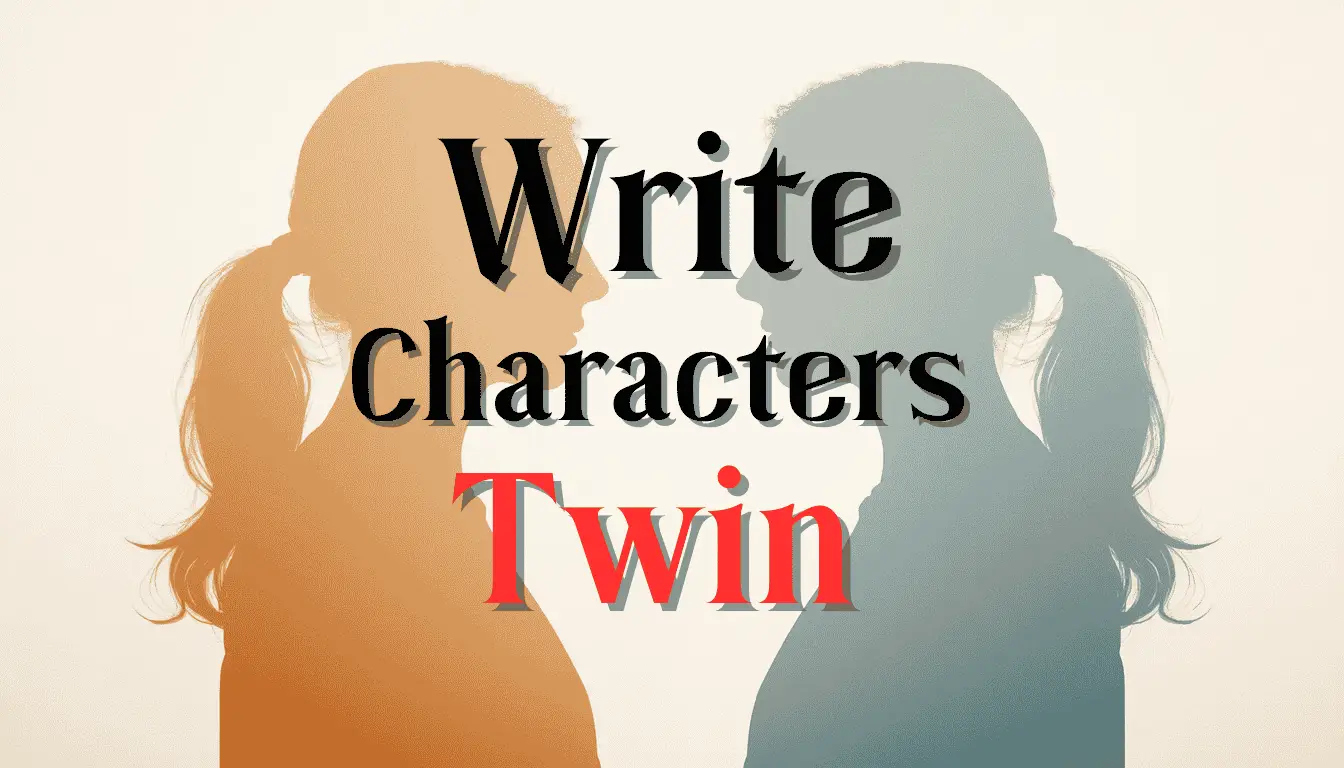
Writing twin characters is one of those craft challenges that looks simple on the surface and then completely humbles you the moment you try. Many writers assume twins are just two versions of the same person. But the best twin characters in fiction do something far more interesting: they use their sameness to reveal how different two people can become.
Much like Sustainable Lining in 2026 where fashion’s most meaningful layer is the one you don’t always see great twin characters carry depth beneath the surface. This guide breaks down every technique a writer needs to craft twins characters that readers will remember long after the last page.
How to Write Twin Characters That Actually Feel Different
The biggest mistake writers make when writing twins is writing one character and then copying them. Twins share DNA, a birthday, and often a bedroom. They do not share a soul.
Every great pair of twins characters in fiction earns their place by showing two distinct inner worlds. That distinction comes from three foundations:
Separate internal voices. Even if twins finish each other’s sentences in dialogue, their internal monologue should sound nothing alike. One might be methodical and cautious; the other impulsive and verbal. Readers should be able to tell who is narrating without seeing a name.
Different relationships with their shared identity. One twin might lean into being a twin wearing it like an identity. The other might be quietly desperate to be seen as an individual. This tension alone can fuel an entire novel’s worth of conflict.
Separate wants and fears. At the core of every well-written character is something they want and something they’re afraid of. For twin sister characters especially, these goals and fears should diverge in ways that create real friction between them.
How to Name Twins: Getting It Right From the Start
Writers often underestimate how much naming choices shape reader perception. When thinking about how to name twins, the instinct is to match names — think Bella and Ella, or Mark and Marc. Sometimes that works. More often, it signals that the writer sees the twins as a unit rather than individuals.
Strong twin names can be subtly connected without being matchy. They might share a first letter, or come from the same cultural tradition, without sounding like a matched set. The best twin names feel like a choice the parents made — and the twins have since formed their own relationship with.
For twin sister characters, names can do quiet work: a name that feels soft versus one that feels strong, even between sisters, plants early seeds of characterization before the reader has read a single scene.
Popular Twin Characters in Fiction: What Makes Them Work
Some of the most popular twin characters in literature and film succeed because they treat the twin dynamic as a philosophical device not just a plot convenience.
Fred and George Weasley work because they choose to operate as a unit while the story quietly reveals individual moments of divergence. The Grady twins in The Shining are terrifying precisely because they have no individuality and readers instinctively understand that as wrong. Viola and Sebastian in Twelfth Night derive their entire dramatic engine from the question of who they are without the other.
What every pair of popular twin characters shares is intentionality. The author made deliberate choices about what makes these twins alike and what makes them profoundly different and never let those choices disappear under plot pressure.
For a deeper look into real-world twin science, myths, and famous fictional pairs, check out our Twin Characters & Twin Facts: A Complete FAQ Guide.
Write Down Two Characters, Not One Character Twice
Here is the discipline that separates competent twin writing from memorable twin writing: write down two characters from scratch, independently, before you ever put them in a scene together.
Start by filling out a full character sheet for Twin A without mentioning Twin B at all. Then do the same for Twin B. When you lay them side by side, the overlaps will be natural and the differences will be real earned through separate character work rather than manufactured through plot.
This approach also helps when writing twins characters with DID or other psychological complexity. Characters who have dissociative identity disorder require careful research and sensitivity. The internal experience of DID is not the same as being a twin, and conflating the two is a common and damaging misstep. If someone wants to know how to write characters with DID authentically, the work begins with research, sensitivity readers, and a clear distinction between that character’s experience and the separate concept of twinhood.
How to Write a Character with Trust Issues many twin characters carry deep trust wounds, especially around each other.
How to Write Special Characters Into Twin Dynamics
Writers often treat the “twin bond” as a special character trait that works on its own. It doesn’t. The bond has to be earned on the page.
The way to write special character dynamics between twins is through specific shared history. They don’t just love each other they have a specific memory, a specific joke, a specific wound. The reader doesn’t need to feel the twin bond explained. They need to feel it in action.
When a twin knows something about the other character that no one else knows and the reader sees that knowledge used, misused, or protected that is when the twin dynamic becomes a genuine narrative engine.
Writing Alphanumeric and Symbolic Names for Twin Characters in Worldbuilding
For writers working in speculative fiction, fantasy, or sci-fi, twin characters sometimes carry names that include symbols, numbers, or non-standard characters. If you’re figuring out how to write name in alphanumeric characters for a character in a digital or sci-fi world, the key is consistency and readability.
For example, a character named K4-l and K4-r (twin designations in a dystopian setting) works when the naming convention is part of the world’s logic. Readers can follow how to write special character on laptop keyboards when copying or typing these names if the author establishes early how those names are pronounced and styled.
Similarly, if you need to know how to write symbol characters for worldbuilding purposes such as twin names rendered in a fictional script focus on phonetic consistency. Readers tolerate unusual names when they can hear them in their heads.
Write name in special characters sparingly and only when the world demands it. If you’re writing realistic fiction, unusual character styling reads as affectation rather than creativity.
Some writers also ask how to write name in alphanumeric characters when building character databases, story bibles, or wikis. For organization purposes, a naming convention like Twin_A_01 and Twin_A_02 is perfectly functional in a writer’s own notes just don’t let it bleed into the manuscript.
How to Write Twins With Chronic Illness or Disability
This section deserves its own space because it comes up more often than writers expect and is handled poorly more often than it should be.
Chronic illness in YA fiction writing has grown significantly as a topic of discussion, and for good reason. Readers with chronic illness are hungry for characters who reflect their experience. When one twin has a chronic illness and the other does not, the dynamic between them can become one of the most emotionally complex and narratively rich relationships in the story.
The most important principle in disability representation in character writing is this: the illness is not the character. If a twin with chronic illness is only ever sick, only ever a burden, only ever the one who needs protecting that is not representation. That is a plot device wearing a human face.
How to write a sick character without making it their whole identity starts with giving that character wants that have nothing to do with their illness. What do they love? What are they angry about? What do they want to become? The illness shapes those answers. It does not replace them.
A strong chronic illness character arc in YA shows the character navigating something that is genuinely hard physically, emotionally, socially while still being a full person. The twin dynamic adds a specific layer here: the healthy twin often carries guilt, overprotectiveness, or a complicated sense of freedom that the ill twin doesn’t have. Those feelings, handled honestly, create extraordinary fiction.
How to Write a Character with Chronic Illness a deep dive into building authentic, dimensional sick characters.
How to Write Twentieth in Numbers and Other Craft Details That Matter
Writers working on twin-focused stories often deal with timeline logistics tracking which twin was born first, which event happened on what date, and how to mark milestone moments like a twentieth birthday or anniversary. Knowing how to write twentieth in numbers (20th) is one of those small stylistic questions that comes up when writing milestone chapters: On the twins’ 20th birthday, everything changed.
Consistency in date formatting throughout a manuscript is a quiet professionalism signal. Whether a writer uses “twentieth,” “20th,” or spells it out depends on house style — but it should never vary mid-manuscript without reason.
Twin Sister Characters: A Special Case
Twin sister characters carry a particular weight in fiction because so much cultural mythology surrounds female twins. The good twin and the evil twin. The pretty one and the smart one. The one who gets the boy and the one who sacrifices everything.
The best twin sister characters in contemporary fiction actively resist those archetypes or use them as a starting point to subvert. A writer’s job is not to ignore the cultural weight of twin sister stories. It’s to know that weight is there and make deliberate choices about it.
Give twin sisters different relationships with femininity, ambition, family expectation, and each other’s presence. The most painful twin sister conflicts are rarely about external events. They’re about the feeling one twin has that the other is living the life that was supposed to be hers.
How to Write a Character Inspired by Yourself many writers draw from real twin relationships they’ve witnessed or lived.
How to Name Twins Without Limiting Them
Revisiting how to name twins from a deeper angle: names shape how readers anticipate character behavior before they’ve read a single line of dialogue.
A twin named “Grace” and a twin named “Mercy” will arrive with immediate thematic weight. A twin named “James” and a twin named “Jamie” suggests a family that sees them as variations on a theme. A twin named “Leonora” and a twin named “Sam” signals something unusual about that family and that unusualness is itself information.
The best twin names carry an implicit story about how those twins have been perceived and set up the reader to watch whether the twins will accept or resist that perception.
How to Write Twins: A Practical Summary
Writers who want to craft twins characters that truly work should keep these principles close:
Start with two complete, separate characters. Build them as individuals before putting them in a room together.
Make their sameness the source of their deepest conflict. It’s not that they’re different that causes problems. It’s that they’re too alike in the one way that matters most.
Let them have relationships the other twin knows nothing about. Secret friendships, private grief, an interest the other doesn’t share these are what make twin characters feel real.
Give the reader a way to tell them apart that isn’t physical description. Voice, rhythm, what they notice, what they ignore these are the invisible markers of distinct character.
And finally: resist the urge to use twins as a plot mechanism. The “one is mistaken for the other” twist is fine. But it should never be the only reason the twins exist.
Writers Digest Writing Complex Sibling Relationships offers broader guidance on all sibling dynamics, including twins.
Final Thoughts
There’s a reason some of the most beloved stories in fiction center on twins. The twin relationship is a mirror and mirrors, when used well, show us something true about what it means to be a self.
When a writer understands that the real story of twin characters is always about identity who am I when someone so like me exists they stop writing a set and start writing two people.
That’s where the best twin fiction begins.


Leave a Reply